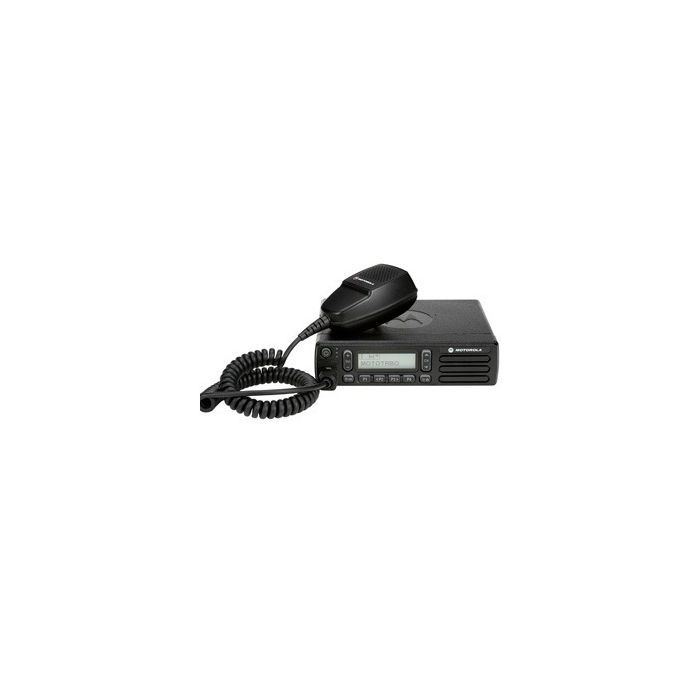
Motorola CM300d-DV-25 Mobile Two-Way VHF Radio (AAM01JNH9JA1_N)
In stock
- VÖRUMERKI:
- MOTOROLA
- FYRIRMYND:
- CM300d-DV-25
- HLUTI #:
- AAM01JNH9JA1_N
- AVAILABILITY:
- SUBJECT TO AVAILABILITY
- SKU:
- Motorola-CM300d-DV-25
Motorola CM300d-DV-25 Mobile Two-Way VHF Radio (AAM01JNH9JA1_N)
Motorola CM300d-DV-25 Mobile Two-Way VHF Radio (AAM01JNH9JA1_N)
The CM300d-DV-25 variant is commonly listed as a VHF digital conventional mobile radio covering 136–174 MHz, with 25 watts of output and 99 channels. Dealer listings tied to the exact part number AAM01JNH9JA1_N describe it as a digital VHF model that also supports analog for migration, and they highlight features such as Radio Check, Remote Monitor, Radio Inhibit, Dual Priority Scan, Transmit Interrupt, and Dual Capacity Direct Mode.
For businesses searching terms such as Motorola CM300d DV-25, AAM01JNH9JA1_N mobile radio, 25 watt VHF MOTOTRBO radio, or Motorola CM300d digital VHF mobile radio, this model is especially relevant because it combines practical mobile-radio hardware with the advantages of Motorola’s MOTOTRBO digital platform. In the broader CM300d line, Motorola officially lists support for VHF operation, 99 channels, an alphanumeric display, IP54 protection, and digital capabilities associated with the MOTOTRBO ecosystem.
Introduction / Overview
The Motorola CM300d is the more capable display-equipped model in the CM Series Mobile Two-Way Radio family, alongside the CM200d. Motorola says the series is intended to help teams communicate, coordinate, and collaborate more efficiently, especially in vehicle-centered work such as cargo delivery, trucking, and school transportation. The CM300d stands out within the series because Motorola assigns it a 99-channel capacity and an alphanumeric display, making it better suited for larger or more structured operations than entry-level mobile radios.
The AAM01JNH9JA1_N configuration is part of the VHF 136–174 MHz CM300d range. Motorola’s official CM Series specification sheet lists VHF models with 1–25 W low-power and 25–45 W high-power groupings, while dealer sources identify this exact DV-25 model as the 25-watt digital VHF version. That makes it an important option for organizations that want VHF propagation characteristics in open terrain or road-based coverage areas, while also benefiting from MOTOTRBO digital conventional operation.
Unlike analog-only mobile radios, the CM300d-DV-25 is marketed as a digital conventional model. That distinction matters because it places the radio inside Motorola’s DMR-based MOTOTRBO environment, where users can take advantage of digital voice efficiency, management features, and migration compatibility with existing analog fleets. Dealer descriptions for the DV-25 explicitly mention both digital operation and analog support for easy migration.
Design and Features
Alphanumeric Display and Straightforward Controls
One of the defining features of the CM300d is its monochrome alphanumeric display. Motorola’s materials describe the CM300d display as a high-contrast interface that allows users to view caller ID, channel number, and contacts, improving usability in vehicles and dispatch-linked workflows. This is useful for drivers and operators who need fast, glanceable information rather than complex navigation.
Dealer listings for the AAM01JNH9JA1_N model also note a white-lit backlight, reinforcing the radio’s suitability for mixed lighting conditions inside vehicles, maintenance trucks, and mobile service environments. The same listings position the radio as appropriate for users who want clear status information without moving to a larger or more complex control head.
Digital Conventional Operation
The DV-25 model is notable because it is marketed as a digital conventional radio rather than an analog-only base version. Dealer listings for the exact model mention VHF, Digital Conventional, 25W, 99 Channels and name features associated with digital MOTOTRBO operation, including Radio Check, Remote Monitor, Radio Inhibit, Transmit Interrupt, and Dual Capacity Direct Mode. Those features go beyond basic voice transmission and make the radio more useful in managed fleet or supervised communications environments.
Motorola’s broader CM Series documentation also supports this positioning. The official product page and specification sheet list CM300d platform features such as Transmit Interrupt (decode only), Voice Announcement, Basic Privacy, and Dual Capacity Direct Mode in supported digital contexts.
Analog Compatibility for Migration
Even though the CM300d-DV-25 is marketed as a digital VHF model, dealer listings also state that it supports analog for easy migration. That is significant for organizations that still use older analog systems but want to begin transitioning into a digital fleet without replacing every radio at once. Motorola also describes the CM Series as a platform that supports analog and digital operation depending on configuration, which aligns with the migration-oriented language used by dealers.
Scan, Management, and Dispatch-Oriented Features
The CM300d-DV-25 includes features that matter in managed business radio systems. Dealer sources highlight Dual Priority Scan, Radio Check, Remote Monitor, Radio Inhibit, and Transmit Interrupt. These features can help supervisors and radio administrators confirm radio presence, manage field units, and improve control over communications. Motorola’s official CM300d documentation also references Radio Management Suite compatibility, which is valuable for organizations that program and maintain larger fleets.
Durability and Environmental Protection
Motorola’s CM Series specification sheet lists the radio with IP54 protection and references MIL-STD environmental testing, while the company’s product page states that CM Series units undergo Accelerated Life Testing to simulate years of field use. These characteristics are important in agriculture, transport, field maintenance, and service vehicles where vibration, dust, splashes, and temperature variation are routine.
Technology and Specifications
Core Technical Specifications
Motorola’s official CM Series specification sheet lists the following platform-level characteristics for the CM300d VHF range:
- Frequency range: 136–174 MHz
- Channel capacity: 99
- Power levels: 1–25 W low power, 25–45 W high power
- Dimensions: 1.7 x 6.7 x 5.3 in (44 x 169 x 134 mm)
- Weight: 2.9 lb (1.3 kg)
Dealer listings for AAM01JNH9JA1_N identify the exact DV-25 configuration as 25 watts, VHF 136–174 MHz, and 99 channels, confirming where it fits inside Motorola’s broader CM300d lineup.
Receiver, Audio, and Channel Performance
Motorola’s specification sheet lists 12.5 kHz and 25 kHz channel spacing, ±0.5 ppm frequency stability, and receiver sensitivity figures of 0.3 µV analog (12 dB SINAD) with 0.22 µV typical, plus 0.25 µV digital (5% BER) with 0.19 µV typical. The sheet also lists 4 W internal audio output, 7.5 W external at 8 ohms, and 13 W external at 4 ohms. These specifications indicate a business-grade mobile radio engineered for clear voice performance when installed with appropriate accessories and antenna systems.
Digital Standards
Motorola lists the CM300d platform as compliant with ETSI TS 102 361-1, -2, and -3 for digital operation, using AMBE+2 vocoder technology and 4FSK modulation. Motorola also notes that Dual Capacity Direct Mode uses 2-slot TDMA DMR to improve efficiency in direct mode without a repeater in supported deployments. These details matter because they confirm that the CM300d-DV-25 is part of a standards-based digital commercial radio ecosystem rather than a proprietary closed platform.
Electrical and Environmental Performance
Motorola’s specification sheet lists current drain values of 0.81 A maximum in standby, 2 A maximum on receive at rated audio, and up to 11.0 A maximum transmit for the 1–25 W configuration. Environmental specifications include an operating temperature range of -30°C to +60°C, storage temperature of -40°C to +85°C, IEC 61000-4-2 Level 3 ESD, and IP54 ingress protection when properly configured.
Applications and Use Cases
The Motorola CM300d-DV-25 is intended for organizations that need a vehicle-mounted or fixed mobile VHF digital radio for daily operations.
Transportation and Fleet Coordination
Motorola explicitly markets the CM Series toward everyday drivers, including cargo delivery, dispatching, and school bus operations. In these environments, a radio like the DV-25 provides reliable voice communication, channel organization, and integration with broader dispatch procedures.
Agriculture and Rural Service Operations
Dealer descriptions for the VHF CM300d state that it is ideal for agriculture, transportation, retail, and hospitality businesses that need to increase range. VHF is often selected for broader outdoor coverage and open-area operations, which makes the DV-25 a logical fit for farms, ranches, rural service fleets, and wide-area maintenance teams.
Retail, Hospitality, and Mixed Operations
Although VHF is often associated with wider-area use, dealers also position the CM300d VHF for retail and hospitality operations. In practice, that can include hotel transport vehicles, engineering vans, grounds teams, large property operations, and campus vehicles that need to stay connected to a central operations point.
Base Station or Fixed Mobile Use
Dealer listings also mention that users can add a 120V AC power supply and base antenna to improve coverage in a local area of operation. That means the CM300d-DV-25 can also serve in fixed positions such as gatehouses, workshops, local dispatch desks, or maintenance control rooms.
Advantages / Benefits
The CM300d-DV-25 offers a useful balance between conventional mobile-radio simplicity and digital-era capability.
Digital VHF Communications
Because the exact model is marketed as Digital Conventional, it offers a stronger feature set than analog-only configurations and fits directly into MOTOTRBO digital deployments.
25-Watt Mobile Output
Its 25-watt VHF output makes it more capable than handheld radios for vehicle and fixed mobile use, while still fitting the standard power tier used by many commercial fleets.
99-Channel Capacity
The 99-channel structure helps organizations separate users by route, department, region, or operating function, making the radio better suited to growing or multi-team operations.
Analog/Digital Migration Support
Dealer sources explicitly note analog compatibility for easy migration, which protects investment for organizations transitioning from legacy fleets.
Commercial Durability
IP54 protection, Motorola life-testing, and MIL-STD references make the radio suitable for demanding work environments rather than light consumer use.
Comparisons
CM300d vs. CM200d
Within Motorola’s CM Series, the CM300d is the more capable model. Motorola gives it 99 channels and an alphanumeric display, while the CM200d is more basic. For businesses with structured fleets or multiple talk paths, the CM300d is the better fit.
DV-25 vs. Analog VHF CM300d
Dealer results also show an analog VHF 25-watt CM300d under a nearby part number, while the AAM01JNH9JA1_N model is the digital conventional version. The DV-25 is therefore the stronger choice for buyers who want MOTOTRBO digital capability from the start rather than planning an upgrade later.
VHF vs. UHF CM300d
Motorola offers the CM300d in both VHF 136–174 MHz and UHF 403–470 MHz versions. In general, VHF is more often favored for open-area coverage, while UHF is often chosen for denser built environments. The DV-25 is specifically a VHF digital 25-watt model.
Pricing and Availability
Motorola’s official CM300d page does not publish a universal retail price, instead directing buyers to sales channels and partners.
Third-party listings for the AAM01JNH9JA1_N model vary by seller, packaging, and region. Some dealers present it as a stocked digital model, while others focus on quote-based ordering. Because commercial radio purchases often involve programming, microphones, antennas, mounting kits, and licensing considerations, buyers should confirm the exact package contents, current stock status, and lead time before ordering. Dealer pages reviewed here confirm that the model is actively listed in the market, but exact price visibility varies across sources.
FAQ Section
What is the Motorola CM300d-DV-25 Mobile Two-Way VHF Radio?
The Motorola CM300d-DV-25 is a digital conventional VHF mobile radio in the MOTOTRBO CM Series. It is commonly listed as a 136–174 MHz, 25-watt, 99-channel business radio under part number AAM01JNH9JA1_N.
How does the Motorola CM300d-DV-25 work?
It works by transmitting and receiving voice traffic over licensed VHF business radio channels. The DV-25 is designed for use in vehicles or fixed mobile installations and supports digital conventional operation, with analog compatibility for migration in mixed environments.
Why is the Motorola CM300d-DV-25 important?
It is important because it combines commercial VHF coverage, digital MOTOTRBO capability, 99-channel flexibility, and fleet-oriented management features in a practical mobile-radio format.
What are the benefits of the Motorola CM300d-DV-25?
Its main benefits are 25-watt VHF output, digital conventional operation, 99 channels, an alphanumeric display, analog migration support, and IP54-rated commercial durability.
Is the Motorola CM300d-DV-25 analog or digital?
The exact AAM01JNH9JA1_N model is widely listed as digital conventional, but dealer sources also say it supports analog for easy migration.
Summary
The Motorola CM300d-DV-25 Mobile Two-Way VHF Radio (AAM01JNH9JA1_N) is a practical digital mobile radio built for dependable business communications in vehicles and fixed mobile installations. With 136–174 MHz VHF coverage, 25-watt output, 99 channels, an alphanumeric display, digital conventional operation, analog migration support, and IP54 commercial durability, it offers a strong balance of reliability, usability, and long-term value for transportation, agriculture, service fleets, and dispatch-driven organizations. For buyers seeking a Motorola CM300d digital VHF mobile radio, the DV-25 is a well-positioned option within the MOTOTRBO ecosystem.
Specifications
| FYRIRMYND | CM300d-DV-25 |
|---|---|
| HLUTI # | AAM01JNH9JA1_N |
| VÖRUTEGUND | TVÍHLIÐA ÚTVARP |
| VÖRUMERKI | MOTOROLA |