
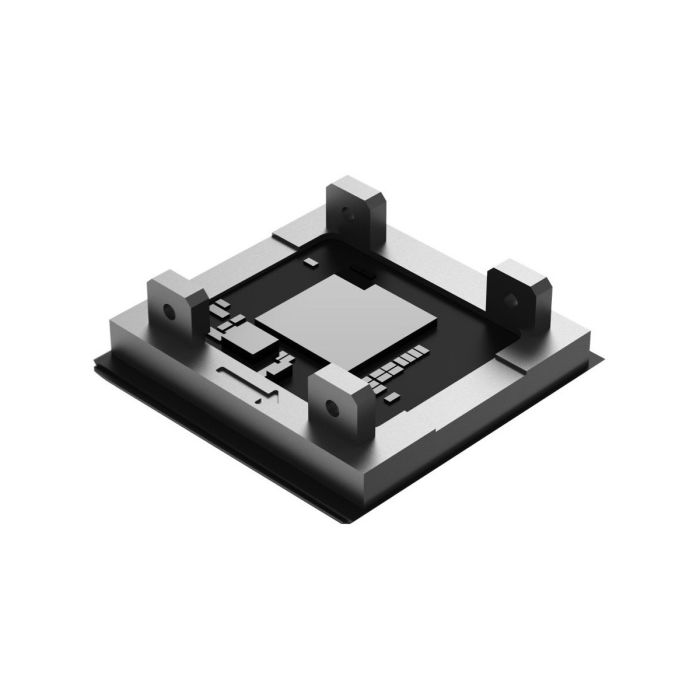
Paxini PX-6AX GEN2 Fingertip Pad (PX6AX-GEN2-MP-M2324)
In stock
- MERKI:
- PAXINI
- HLUTI #:
- PX6AX-GEN2-MP-M2324
- ORIGIN:
- Kína
- AVAILABILITY:
- SUBJECT TO AVAILABILITY
- SKU:
- Paxini-PX6AX-GEN2-MP-M2324
Paxini PX-6AX GEN2 Fingertip Pad (PX6AX-GEN2-MP-M2324)
It belongs to the PaXini PX-6AX GEN2 tactile sensing family, which is positioned as an ITPU (Integrated Tactile Perception Unit) platform for robotics applications requiring distributed contact perception rather than simple single-point force measurement.
In robotic grasping, “fingertip pad” sensors are typically mounted on the finger pulp (the broad pad area used for stable holding). This makes them especially relevant for dexterous robot hands, adaptive grippers, and humanoid manipulation systems where grip stability depends on understanding how forces distribute across a surface, how tangential loads evolve, and when micro-slip begins.
The PX6AX-GEN2-MP-M2324 model is explicitly categorized by PaXini as a multi-dimensional tactile fingertip pad sensor (“多维触觉指腹传感器”) and is listed with compact dimensions of 22.7 mm (L) × 23.4 mm (W) × 9.3 mm (H).
This geometry supports integration in slimmer finger designs while still providing a meaningful pad-area contact surface for stable grasping.
Design and Features
Finger-pad contact surface optimized for stable grasping
Unlike “fingertip” sensors that emphasize a small terminal contact region, a fingertip pad sensor is meant to support continuous, stable contact while holding objects. In human grasping, the pad area is where most stable holds occur; similarly, robotic hands benefit when pad contact is measured and controlled.
The MP-M2324 pad module’s compact footprint helps enable:
-
stable, surface-based grasping of everyday objects (boxes, tools, consumer goods),
-
improved grip control on objects with uncertain friction (smooth plastics, coated packaging),
-
more predictable control during long-duration holds and transport.
Multi-dimensional tactile perception outputs
PaXini’s published PX-6AX GEN2 capability set includes tactile outputs (configuration-dependent) such as:
-
3D distributed force arrays (spatial force/pressure distribution),
-
3D resultant force (net contact force),
-
3D torque / moment output (optional).
For fingertip pad sensing, “distributed force” is especially important because it enables the system to detect:
-
whether contact is centered or off-center,
-
whether pressure is concentrated (risk of damage) or spread (stable grasp),
-
whether contact is shifting (object roll/tilt),
-
the early signals of incipient slip (tangential loading changes).
Ruggedization for repeated-contact robotics environments
PaXini’s GEN2 specifications emphasize real-world durability and deployment readiness, including:
-
IP68 dustproof and waterproof protection,
-
anti-stray magnetic field capability,
-
a stated industrial-grade lifespan supporting over 3 million measurements.
Technology and Specifications
Model dimensions (PX6AX-GEN2-MP-M2324)
PaXini lists the MP-M2324 fingertip pad sensor dimensions as:
-
Length: 22.7 mm
-
Width: 23.4 mm
-
Height: 9.3 mm
PX-6AX GEN2 platform specifications (published parameters)
PaXini’s official PX-6AX GEN2 specification page lists key system-level parameters:
-
Tactile signal count: 360 channels
-
Measurement range:
-
Normal force: 0–25 N
-
Tangential force: ±10 N
-
-
Operating temperature: 0–50°C
-
Measurement sampling frequency: 1,000,000 Hz (as listed)
-
Maximum output frequency: 1000 Hz
-
Spatial resolution: 1 mm
-
Safety overload: 200%
-
Impact overload: 300%
-
Accuracy: < 1%FS
-
Ingress protection: IP68
From a robotics-control perspective, the combination of normal + tangential sensing is particularly valuable: normal force supports safe gripping and contact limitation, while tangential force trends help detect slip risk and adjust grip proactively.
Surface coverage and compensation features
PaXini also describes GEN2 as supporting:
-
coverage across the front face, full front end, and both sides,
-
dynamic temperature perception compensation,
-
optional torque perception supporting arbitrary rotation axis sensing (depending on configuration).
Applications and Use Cases
Dexterous robotic hands (finger-pad grasping)
The MP-M2324 fingertip pad sensor is well-aligned with dexterous grasp strategies that emphasize pad contact, including:
-
power grasps (stable holds with larger surface contact),
-
precision holds where distributed pressure must be kept consistent,
-
multi-finger manipulation where the hand actively regulates contact distribution.
In these scenarios, pad-based tactile sensing helps reduce over-gripping and improves stability without relying solely on vision.
Slip detection and grip stabilization
Slip typically begins with subtle changes in tangential load and contact distribution. With GEN2’s published tangential force range (±10 N) and high output frequency (up to 1000 Hz), tactile feedback can support responsive grip adjustment strategies such as:
-
slight grip increase when tangential load rises,
-
posture correction when pressure becomes uneven,
-
re-centering contact during rolling/tilting events.
This is especially helpful for objects with smooth coatings, uncertain friction, or variable weight distribution.
Pushing, pressing, and controlled surface interaction
Finger-pad tactile sensors are commonly used when robots must interact with surfaces in controlled ways:
-
pushing items along a table or into a bin,
-
pressing latches, buttons, or compliant parts,
-
maintaining safe contact forces during exploration and alignment.
Pad-based sensing can provide stable force feedback during these continuous-contact actions, reducing chatter and minimizing damage risk.
Embodied intelligence and contact-rich learning pipelines
Embodied intelligence systems frequently require large amounts of tactile data to learn stable manipulation under real-world uncertainty. A pad sensor such as MP-M2324 can provide repeatable, information-rich contact signals that complement:
-
vision (which can be occluded during grasp),
-
proprioception (joint states and motor torque),
-
learned control policies that rely on touch to finalize grasps.
Advantages / Benefits
Compact pad module for dense tactile integration
With a listed size of 22.7 × 23.4 × 9.3 mm, MP-M2324 offers a practical balance between integration simplicity and meaningful pad-area contact coverage.
High-density tactile channels (360)
GEN2’s 360 tactile signals support richer contact interpretation than single-point sensors, helping robots understand not only “how much force,” but also “where and how” that force is distributed.
Fast output for real-time control loops
A published maximum output frequency of 1000 Hz can support responsive tactile control behaviors in grasp stabilization and micro-adjustment tasks.
Industrial protection and durability
The GEN2 platform is listed with IP68 protection, overload tolerance (200% safety overload, 300% impact overload), and a stated >3 million measurement usage life, supporting repeated-contact robotics workloads.
Reduced sensitivity to external electromagnetic conditions
PaXini lists anti-stray magnetic field capability for GEN2, which can be relevant when tactile sensing hardware operates near motors, power stages, and high-current wiring.
FAQ Section
What is Paxini PX-6AX GEN2 Fingertip Pad (PX6AX-GEN2-MP-M2324)?
It is a multi-dimensional tactile finger-pad sensor module in PaXini’s PX-6AX GEN2 family, designed for robotic hands, listed at 22.7×23.4×9.3 mm.
How does Paxini PX-6AX GEN2 Fingertip Pad work?
PX-6AX GEN2 supports tactile outputs such as 3D distributed force, 3D resultant force, and optional 3D torque, enabling robots to interpret contact location, distribution, and force direction during grasping.
Why is PX6AX-GEN2-MP-M2324 important?
Finger-pad tactile sensing improves grip stability by tracking distributed contact and tangential loading. GEN2 provides 360 channels, IP68 sealing, and up to 1000 Hz output to support responsive manipulation.
What are the benefits of Paxini PX-6AX GEN2 tactile sensors?
Published GEN2 benefits include multi-dimensional tactile outputs, 360 tactile signals, IP68 protection, overload tolerance, and an industrial-grade usage life claim of over 3 million measurements.
Summary
Paxini PX-6AX GEN2 Fingertip Pad (PX6AX-GEN2-MP-M2324) is a compact multi-dimensional tactile finger-pad sensor intended to improve robotic grasping through distributed touch feedback, slip-aware force control, and stable surface-based contact perception. With published GEN2 platform parameters including 360 tactile channels, normal force 0–25 N, tangential force ±10 N, IP68 sealing, and up to 1000 Hz maximum output frequency, the MP-M2324 form factor (22.7×23.4×9.3 mm) is positioned as a practical tactile sensing building block for dexterous robot hands and contact-rich manipulation systems.
Specifications
| HLUTI # | PX6AX-GEN2-MP-M2324 |
|---|---|
| MERKI | PAXINI |