
Paxini PX-6AX GEN3 Omega (PX6AX-GEN3-CP-L5325-Omega)
In stock
- HLUTI #:
- PX6AX-GEN3-CP-L5325-Omega
- ORIGIN:
- Kína
- AVAILABILITY:
- SUBJECT TO AVAILABILITY
- SKU:
- Paxini-PX6AX-GEN3-CP-L5325-Omega
Paxini PX-6AX GEN3 Omega (PX6AX-GEN3-CP-L5325-Omega)
In Paxini’s official GEN3 catalog, the CP-L5325-Omega is categorized as a fingerpad sensor for the thumb (“指腹传感器(大拇指)”), reflecting its geometry and coverage goals for dexterous hands and humanoid end-effectors.
PX-6AX GEN3 is positioned as an industrial-ready tactile platform with specifications emphasizing multi-dimensional force interpretation, high-speed measurement and output, and environmental robustness. Paxini lists GEN3 outputs such as 3D distributed force arrays, 3D resultant force, and 3D torque/moment, along with high channel density and protection features intended for continuous contact tasks in real environments.
Design and Features
Thumb fingerpad geometry and surface coverage
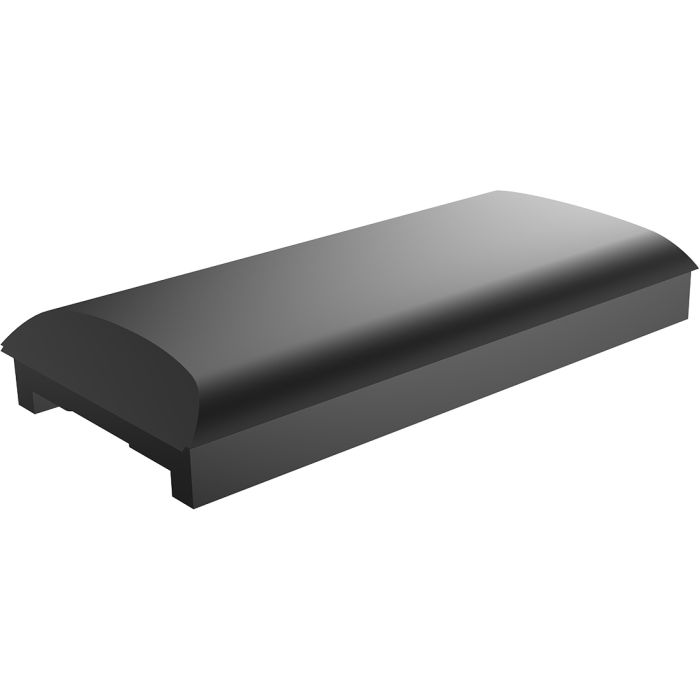
The CP-L5325-Omega is specified with dimensions 53 × 25 × 8 mm (L×W×H) on Paxini’s official GEN3 page, and is presented as a thumb fingerpad-class tactile unit.
Paxini also notes surface coverage designed for practical grasping, stating that the model supports coverage of the front face and side curved edge regions (“正面及侧周曲面边缘全覆盖”), which is important for thumb contact where objects often roll or shift across edges during manipulation.
Multi-dimensional tactile perception (“15 types”)
Paxini describes GEN3 as supporting multi-dimensional tactile perception with “15 types” of tactile interpretation (“15 种物理解析” / “15 types”).
While public pages may not enumerate all 15 analyses in detail, the framing is intended to convey richer tactile state understanding than single-axis pressure sensors—useful for interpreting contact transitions, load direction changes, and grasp stability.
Industrial robustness and calibration positioning
GEN3 is positioned with features aimed at long-term deployment:
-
IP68 waterproof/dustproof rating
-
Chip-level anti-magnetic interference (“芯片级抗磁”)
-
Factory calibration messaging is common in GEN3 listings and contributes to repeatability targets and integration consistency.
Technology and Specifications
Model identification and dimensions
For PX6AX-GEN3-CP-L5325-Omega, Paxini lists:
-
Type: Thumb fingerpad tactile sensor (“指腹传感器(大拇指)”)
-
Dimensions: 53 × 25 × 8 mm
Third-party listings for the same model repeat these dimensions and summarize the same platform claims (IP68, 1000 Hz, 0.01 N).
Measurement outputs
Paxini’s official GEN3 page lists the measurement outputs as:
-
3D array distributed force
-
3D resultant force
-
3D torque / moment
Signal channels and performance parameters (GEN3 platform)
On the official GEN3 page, Paxini publishes key parameters that apply to the GEN3 family and are shown for the CP-L5325-Omega section:
-
Tactile signal channels: up to 717
-
Force range: normal 0–25 N, tangential ±10 N
-
Sampling frequency (measurement): 1,000,000 Hz
-
Maximum output frequency: 1000 Hz
-
Minimum identifiable force: 0.01 N
-
Spatial resolution: 0.1 mm
-
Repeatability: < 0.5%FS
-
Ingress protection: IP68
-
Working voltage: 3–5 V
-
Safe overload: 200%; impact overload: 300%
-
Working temperature: 0–50°C; over-temperature: −20 to 120°C
-
Flame rating: V-0 (UL94) is shown on the official page for the model section
-
Dynamic temperature compensation: listed as supported
-
Torque sensing: “supports sensing around an arbitrary point axis” is noted in the model section
Paxini also marks certain figures as lab-sourced (e.g., noted on the official page with an asterisk indicating data comes from Paxini’s lab).
Applications and Use Cases
Dexterous hands and humanoid manipulation (thumb contact)
Because the thumb plays an outsized role in stable grasp formation, a thumb fingerpad tactile sensor is often used to:
-
regulate pinch forces,
-
detect contact asymmetries between thumb and fingers,
-
stabilize objects during rolling or regrasping.
The CP-L5325-Omega’s larger pad area (53×25 mm) supports broader contact mapping and edge coverage, which can help when objects shift across curved surfaces.
Slip detection and friction changes during grasping
High-rate tactile output (up to 1000 Hz) and tangential force range (±10 N) support detecting rapid changes that precede slip, particularly when handling smooth plastics, coated metals, or compliant packaging.
Contact-rich assembly and insertion tasks
In manufacturing-style tasks (press-fit alignment, connector insertion, constrained placement), tactile arrays can provide feedback when vision is occluded. GEN3’s published 3D force/moment outputs and repeatability targets align with such force-controlled behaviors.
Embodied AI dataset collection
Dense tactile signals (up to 717 channels) and fine spatial resolution (0.1 mm) are useful for collecting tactile datasets that encode contact patterns across a surface—helpful in training or evaluating tactile policies in embodied intelligence research.
Advantages / Benefits
Larger, thumb-optimized contact patch
Compared with smaller fingertip modules, the CP-L5325-Omega’s 53×25 mm geometry is designed to provide a broader thumb contact map and side-edge coverage, supporting more stable manipulation behaviors.
High-rate output for responsive control
Paxini lists 1000 Hz maximum output frequency, enabling real-time tactile feedback loops for grasp stabilization, contact transitions, and slip mitigation.
Fine-force sensitivity and spatial precision
The platform’s 0.01 N minimum identifiable force and 0.1 mm spatial resolution support delicate manipulation and contact localization in tight tolerances.
Environmental sealing and durability positioning
GEN3’s IP68 rating and durability claims (supporting >10 million measurements, per the official page’s lab-noted figures) target longer life in repeated-contact applications.
FAQ Section
What is Paxini PX-6AX GEN3 Omega (PX6AX-GEN3-CP-L5325-Omega)?
It is an Omega-series GEN3 multi-dimensional tactile sensor from Paxini, categorized as a thumb fingerpad tactile sensor with dimensions 53×25×8 mm, designed for high-resolution robotic touch perception.
How does Paxini PX-6AX GEN3 Omega work?
Paxini describes GEN3 as producing 3D distributed force arrays, 3D resultant force, and 3D torque/moment, with high-frequency measurement and up to 1000 Hz output for real-time tactile feedback in robotic control systems.
Why is Paxini PX-6AX GEN3 Omega important?
Dexterous manipulation often fails due to uncertain friction, occluded vision, and rapid slip events. GEN3’s published specs (dense signals, fine force threshold, and high output rate) are intended to help robots interpret contact dynamics and stabilize grasps.
What are the benefits of Paxini PX-6AX GEN3 Omega?
Key published benefits include 53×25×8 mm thumb pad coverage, IP68 sealing, 0.01 N minimum identifiable force, 0.1 mm spatial resolution, and up to 1000 Hz maximum output frequency for responsive tactile control.
Summary
Paxini PX-6AX GEN3 Omega (PX6AX-GEN3-CP-L5325-Omega) is a thumb-oriented fingerpad tactile sensor (53×25×8 mm) within Paxini’s GEN3 multi-dimensional tactile platform. With published capabilities including 3D distributed force and torque/moment outputs, up to 717 tactile channels, 0.01 N minimum identifiable force, 0.1 mm spatial resolution, IP68 sealing, and up to 1000 Hz output, it is positioned for contact-rich dexterous manipulation, humanoid grasp stabilization, and embodied AI workflows requiring high-quality tactile data.
Specifications
| HLUTI # | PX6AX-GEN3-CP-L5325-Omega |
|---|