
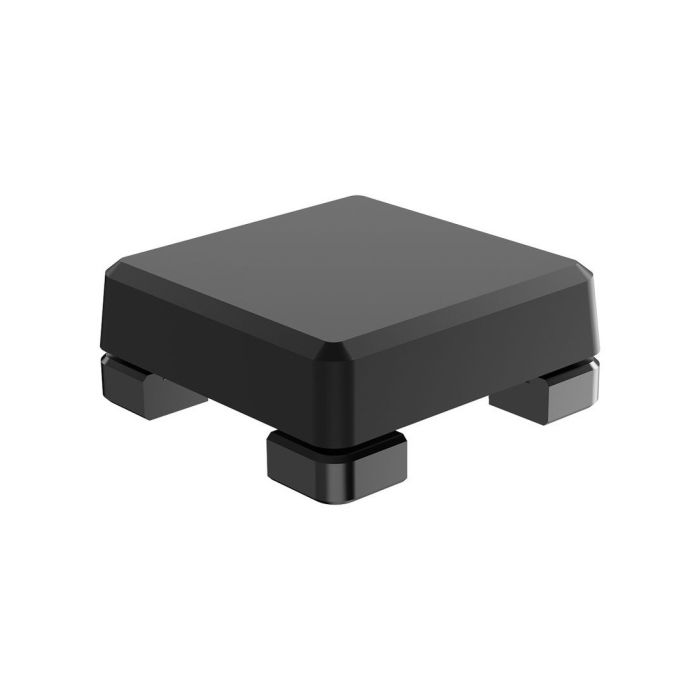
Paxini PX-6AX GEN3 Elite (PX6AX-GEN3-MC-M2020-Elite)
In stock
- MERKI:
- PAXINI
- HLUTI #:
- PX6AX-GEN3-MC-M2020-Elite
- ORIGIN:
- Kína
- AVAILABILITY:
- SUBJECT TO AVAILABILITY
- SKU:
- Paxini-PX6AX-GEN3-MC-M2020-Elite
Paxini PX-6AX GEN3 Elite (PX6AX-GEN3-MC-M2020-Elite)
It is part of PaXini’s PX-6AX GEN3 tactile sensor family, which targets “embodied intelligence” applications by combining dense tactile perception with robust packaging for real-world industrial use. In the GEN3 lineup, the MC-M2020-Elite is positioned as a palm sensor (hard surface) module with a square footprint intended to broaden tactile coverage beyond fingertips and finger pads.
PaXini describes its sensing approach as grounded in a Hall-array-based, multi-dimensional tactile technology platform, and markets the GEN3 series around high-frequency sampling, repeatability, fine force discernment, and environmental protection.
Design and Features
Form factor and mounting intent
The MC-M2020-Elite is listed as a palm tactile sensor with dimensions 20 × 20 × 8 mm (L×W×H). This square format is typically suited to mounting on robotic palms, gripper faces, or contact plates, complementing smaller fingertip sensors used for precision grasping.
Elite-series positioning
Within the GEN3 “Elite” series, PaXini groups multiple sensor sizes covering fingertip, finger-pad, and palm footprints, aiming to provide a modular path to “full-hand” tactile coverage (fingertip-to-palm) using consistent electronics and performance claims across form factors.
Environmental durability and handling
PaXini highlights industrial-style durability characteristics for PX-6AX GEN3, including IP68 dust/water protection and high-cycle press durability (marketed as continuous pressing endurance in the millions of cycles).
Technology and Specifications
Core sensing outputs
PaXini’s PX-6AX GEN3 product parameters describe outputs that include 3D distributed force arrays, 3D resultant force, and 3D torque—a set intended to support not only contact detection but also slip inference, load distribution estimation, and torque-aware manipulation.
Key published performance parameters (GEN3 family)
On its GEN3 specifications page, PaXini lists the following representative parameters for the PX-6AX GEN3 series:
-
Measurement range: normal (0–25 N), tangential (±10 N)
-
Repeatability: < 0.5% FS
-
Minimum recognizable force: 0.01 N
-
Spatial resolution: 0.1 mm
-
Sampling frequency (measurement): 1,000,000 Hz; maximum output frequency: 1000 Hz
-
Ingress protection: IP68
-
Operating voltage: 3–5 V
-
Operating temperature: 0–50°C; overload temperature range: -20 to 120°C
-
Overload tolerance: 200% safe overload, 300% impact overload
-
Anti-interference: marketed as chip-level magnetic resistance
-
Signal count: up to 717 tactile signal channels (as presented on the GEN3 parameters page)
Model-specific identifier
The palm sensor variant covered here is explicitly identified as:
-
Part number: PX6AX-GEN3-MC-M2020-Elite
-
Type: palm sensor (hard surface)
-
Dimensions: 20 × 20 × 8 mm
Applications and Use Cases
Robotic manipulation under occlusion
In many pick-and-place or bin-picking tasks, vision can be partially blocked by the gripper, the object, or the environment. A palm-mounted tactile sensor can provide contact confirmation and force distribution cues even when cameras lose line-of-sight—supporting safer closure, controlled pushes, and regrasp strategies.
Contact-rich assembly and alignment
Square “palm” modules are often used to detect micro-contacts during insertion, alignment, seating, and press-fit processes. A controller can use tactile feedback to detect misalignment early (before high forces build), then adjust position or compliance.
Slip-aware handling of varied materials
PaXini markets GEN3 around “multi-dimensional” tactile perception and fast sampling, which—when paired with appropriate signal processing—can support detection of incipient slip or changing friction during manipulation. This is relevant for mixed-material handling (packaging, components, flexible items) where stable grasps depend on fast force feedback rather than vision alone.
Research in embodied intelligence
Tactile sensing is frequently used in robotics research to train or evaluate policies for dexterous manipulation. A palm sensor adds a larger-area contact channel to datasets and learning pipelines, complementing fingertip sensors used for pinch and precision grasps.
Advantages / Benefits
Improved safety and contact control
By measuring contact forces (including tangential components) and supporting torque-related outputs, tactile modules can enable gentler interactions with objects, tooling, and work surfaces—especially when combined with compliant control strategies.
Expanded tactile coverage beyond fingertips
Fingertip sensing is valuable for precision, but many real grasps involve palm or gripper-face contact. A 20×20 mm palm sensor helps extend sensing coverage to larger contact patches, which can improve stability for bulky objects or “supporting” grasps.
Ruggedization for real deployments
PaXini emphasizes IP68 and high-cycle durability for GEN3, which can be important for labs and industrial pilots where sensors must survive repeated contact, cleaning, and environmental exposure.
FAQ Section
What is the PaXini PX-6AX GEN3 MC-M2020-Elite?
It is a multi-dimensional tactile sensor in PaXini’s PX-6AX GEN3 “Elite” lineup, designed as a palm sensor (hard surface) with a 20×20×8 mm form factor.
How does the PX-6AX GEN3 tactile sensor work?
PaXini markets PX-6AX GEN3 as a high-frequency tactile sensing platform that outputs 3D distributed force, 3D resultant force, and 3D torque signals, enabling robots to perceive contact dynamics during grasping and interaction.
Why is tactile sensing like MC-M2020-Elite important in robotics?
Tactile sensing helps robots control contact forces, detect slip or misalignment, and operate more reliably when vision is occluded—capabilities that are central to dexterous manipulation and many embodied AI workflows.
What are the benefits of the MC-M2020-Elite palm sensor size?
A palm-sized tactile module expands sensing beyond fingertips, providing feedback over larger contact patches—useful for stabilizing grasps, supporting objects against the palm or gripper face, and controlling contact forces during pushing and alignment tasks.
Summary
The PaXini PX-6AX GEN3 Elite MC-M2020-Elite is a 20×20×8 mm palm tactile sensor module within PaXini’s GEN3 tactile platform, positioned for contact-rich robotic manipulation where stable grasps, controlled interaction, and force-aware behaviors benefit from dense tactile feedback. With GEN3-series claims such as IP68 protection, fine force recognition, and high-frequency sampling/outputs, it is typically used to extend tactile perception beyond fingertips into palm and surface contacts—an increasingly important capability for modern industrial robotics and embodied intelligence systems.
Specifications
| HLUTI # | PX6AX-GEN3-MC-M2020-Elite |
|---|---|
| MERKI | PAXINI |