
Pudu PUDU T300 Conveyor-S (PUDU T300 Conveyor-S)
In stock
- VÖRUMERKI:
- PUDU ROBOTICS
- HLUTI #:
- PUDU T300 Conveyor-S
- ORIGIN:
- Kína
- AVAILABILITY:
- SUBJECT TO AVAILABILITY
- SKU:
- Pudu-PUDU-T300-Conveyor-S
Pudu PUDU T300 Conveyor-S (PUDU T300 Conveyor-S)
Pudu PUDU T300 Conveyor-S (PUDU T300 Conveyor-S)
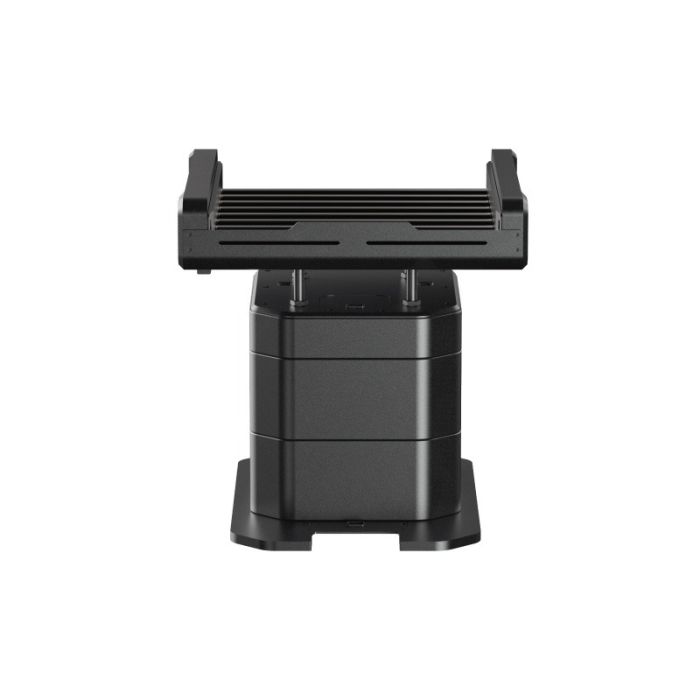
Unlike a basic carrier AMR (where staff load/unload items manually), the Conveyor-S concept targets semi-automated intralogistics: the robot docks to a station, aligns precisely, and uses a self-powered roller system to move goods on or off the robot—supporting “line-to-line,” “line-to-human,” and “human-to-line” transfer patterns often found in factories and warehouses.
Design and Features
Self-powered roller conveyor for automated transfer
A defining element of the Conveyor-S is its self-powered roller system, intended to integrate with existing conveyor lines and material-handling equipment. This enables a workflow where the robot transports items as a “mobile conveyor segment,” reducing manual lifting and shortening transfer time at stations.
Single-layer configuration with optional expansion concept
Product literature for the T300 conveyor module distinguishes between single-layer and double-layer roller configurations. Conveyor-S is generally associated with the single-layer form factor (one roller layer), while some deployments use a double-layer arrangement to increase throughput and payload per trip.
Docking accuracy for repeatable station alignment
To reliably transfer loads to fixed stations, conveyor AMRs require precise docking. Published specifications for the T300 conveyor module cite ±10 mm docking accuracy and ±1° angular accuracy, aligning with typical requirements for roller-to-roller handoff.
Adjustable conveyor geometry for station compatibility
The conveyor module is described as adjustable to fit different station designs:
-
Transfer length (depth) up to 650 mm
-
Conveyor width adjustable from 120 mm to 540 mm
-
Working surface height adjustable from 305 mm to 1100 mm
-
Roller direction adjustable for multi-angle docking (orientation flexibility)
Industrial connectivity and “in-position” monitoring
The conveyor documentation highlights features aimed at production environments, including real-time/in-position monitoring (sensors to confirm correct placement) and IoT connectivity, described as supporting communications with conveyor systems and production workflows (often via PLC communication in industrial contexts).
Technology and Specifications
Base platform: PUDU T300 industrial AMR
Conveyor-S is built on the PUDU T300 base platform, which Pudu markets as an industrial delivery robot compliant with ISO 3691-4 and equipped with safety measures including LiDAR sensors, depth cameras, collision protection sensing, and emergency stop controls.
Pudu also specifies T300’s general mobility envelope, including up to 1.2 m/s speed (site dependent), 60 cm minimum path clearance, and tolerance for 20 mm thresholds and 35 mm grooves—factors that can influence where conveyor-equipped robots can be deployed without facility retrofits.
Conveyor-S payload and transfer capacity
Published conveyor specifications describe:
-
Single-layer rated load: 80 kg per layer (176 lbs)
-
Double-layer expansion concept: 160 kg total (352 lbs) when configured with double-layer rollers
These values typically refer to conveyor module load capacity (what the roller system is intended to transfer), distinct from the T300 base’s maximum payload rating in other configurations.
Operating performance and charging
For the conveyor module configurations, published parameters include:
-
Max speed: 1.2 m/s
-
Run-time (empty): 12 h (single-layer) and 10 h (double-layer)
-
Run-time (full load): 10 h (single-layer) and 8 h (double-layer)
-
Charging time: 2 h (0–90%)
Dimensions, passage width, and weight
The conveyor module sheet provides:
-
Passage width: 75 cm (listed for conveyor configurations)
-
Single-layer robot weight: 120 kg; Double-layer robot weight: 180 kg
-
Robot dimensions (examples shown): 835 mm × 665 mm × 1350 mm or 835 mm × 650 mm × 1350 mm depending on configuration orientation
Interpretation note: These figures reflect the conveyor-equipped build and can differ from the standard T300 base weight and footprint because the conveyor structure adds mass and changes the robot’s envelope.
Applications and Use Cases
Conveyor line bridging and cell-to-cell transfer
A primary use case is acting as a mobile link between conveyor endpoints—moving items between lines or between a line and a workstation when fixed conveyors are impractical, too expensive, or too rigid for a changing layout.
Automated kitting and station replenishment
In factories with kitting operations, Conveyor-S can deliver standardized bins to assembly or test stations and return empties. The conveyor interface reduces manual lifting and speeds up handoff when stations are designed for roller transfer.
Warehouse sortation support and packing lanes
Warehouses can use conveyor AMRs to shuttle cartons between picking zones, packing lanes, and QA points—especially where flow volumes justify automation but layout changes make fixed conveyor investment less attractive.
Human-in-the-loop operations
Conveyor-S is also positioned for mixed workflows where humans load/unload at certain points while other points are automated—supporting gradual automation rather than requiring a fully automated line from day one.
Advantages / Benefits
Faster, safer handoff than manual loading
By transferring items via rollers, Conveyor-S can reduce manual lifting and improve ergonomics, especially for repetitive handling of medium-weight totes and cartons.
Better fit for reconfigurable factories than fixed conveyors
Conveyor AMRs can provide many benefits of conveyors (repeatable flow, standardized transfer points) while remaining movable and easier to re-route when production layouts change. This complements the T300 platform’s SLAM-based navigation approach, which is marketed to reduce reliance on fixed guiding infrastructure.
Precision docking enables reliable automation
Published docking tolerances (±10 mm and ±1°) support repeatable station alignment—critical for reducing jams, misalignment, and manual intervention in automated material transfer.
Integration hooks for industrial control systems
The conveyor documentation’s references to PLC communication and IoT connectivity reflect a common industrial requirement: integrating AMR transfers into station logic, notifications, and production workflow orchestration.
FAQ
What is the PUDU T300 Conveyor-S?
PUDU T300 Conveyor-S is a conveyor-equipped industrial AMR configuration (commonly the single-layer conveyor variant) that transports items and transfers them via a self-powered roller system.
How does the PUDU T300 Conveyor-S work?
It navigates on the T300 AMR base, docks to a station with published accuracy around ±10 mm and ±1°, and uses onboard rollers to move totes/cartons on or off the robot, supporting automated or hybrid handoffs.
Why is the PUDU T300 Conveyor-S important?
It reduces manual lifting and speeds up station transfers by enabling conveyor-style handoffs without installing fixed conveyors everywhere—useful in reconfigurable factories and warehouses.
What are the benefits of the PUDU T300 Conveyor-S?
Commonly cited benefits include 80 kg single-layer payload, adjustable conveyor geometry (up to 650 mm transfer length), precise docking, and long duty cycles supported by fast charging.
Summary
The PUDU T300 Conveyor-S extends the PUDU T300 industrial AMR platform with a single-layer self-powered roller conveyor to automate station-to-station transfers in factories and warehouses. With published specs such as 80 kg per layer capacity, ±10 mm docking accuracy, adjustable conveyor dimensions, and multi-hour runtime with fast charging, Conveyor-S is positioned for intralogistics workflows where reducing manual handling and bridging conveyor endpoints improves throughput and consistency.