
Topsky RXR-C10GL-8 (RXR-C10GL-8)
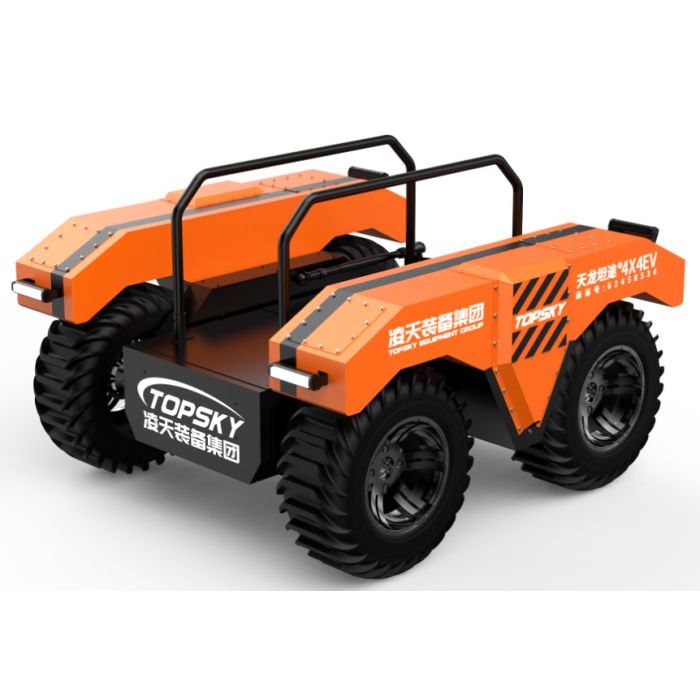
In stock
- MERKI:
- TOPSKY
- HLUTI #:
- RXR-C10GL-8
- ORIGIN:
- Kína
- AVAILABILITY:
- SUBJECT TO AVAILABILITY
- SKU:
- Topsky-RXR-C10GL-8
Topsky RXR-C10GL-8 (RXR-C10GL-8)
In modern emergency management, response robots are commonly used to extend situational awareness, reduce responder exposure to hazards, and support logistics (e.g., moving tools, hoses, or supplies) during time-critical operations. Standards bodies such as the National Institute of Standards and Technology (NIST) publish test methods for “response robots,” reflecting the role these systems can play across mobility, sensing, communications, and operator effectiveness in real deployments.
Design and Features
According to retailer product descriptions, the RXR-C10GL-8 is designed around three primary operational roles:
1) Disaster reconnaissance
The platform is presented as suitable for reconnaissance in disaster contexts, supporting on-scene assessment needs.
2) Rescue-equipment transportation
The robot is explicitly described as capable of transporting rescue equipment, implying a chassis and payload architecture intended for practical field logistics.
3) Intelligent following and guidance
One highlighted capability is an “intelligent follow system,” described as enabling the robot to operate along with rescuers, and including “autonomous navigation guidance” plus “two-way message guidance” in the product description.
While public-facing listings do not provide a full sensor bill of materials, rescue robots in this category are generally evaluated on mobility, stability, controllability, communications, and the ability to operate under dust, debris, uneven ground, and constrained visibility—factors emphasized in response-robot testing frameworks.
Technology and Specifications
Retailer listings provide several concrete specifications that help characterize the RXR-C10GL-8’s mechanical and interface capabilities:
Mobility and mechanical performance
-
Traction force: ≥ 4500 N
-
Gradeability (climbing ability): ≥ 71.9%
-
Maximum traveling speed: ≥ 3.2 m/s
These metrics suggest a platform optimized for uneven terrain and demanding conditions. Gradeability—often communicated as a percent slope—indicates the machine’s stated ability to climb steep inclines under specified conditions, which can matter in rubble fields, ramps, embankments, or broken stair approaches.
Payload and transport interfaces
-
Load capacity: ≥ 500 kg
A stated load capacity of at least 500 kg positions the RXR-C10GL-8 as a heavy-duty logistics platform among ground response robots, where payload determines what can be delivered or moved (equipment, tools, hoses, supplies, or specialized rescue modules) without placing responders directly into hazardous zones.
Hose compatibility (field integration)
-
Matching water hose: DN80
The presence of a DN80 hose reference indicates the model is described as compatible with a specific nominal diameter class commonly used in industrial or municipal contexts, which may support integration into broader incident-scene equipment workflows.
Functional system claims (as described)
Retailer copy characterizes the RXR-C10GL-8 as an “earthquake rescue robot” capable of reconnaissance and equipment transport, with an “intelligent follow system,” “autonomous navigation guidance,” and “two-way message guidance.”
Because a detailed manufacturer datasheet is not included in these listings, specifications such as runtime, radio bands, sensor suite, environmental ratings, and autonomy stack are not confirmed from the cited sources.
Applications and Use Cases
Based on its described role and published headline specifications, the RXR-C10GL-8 is positioned for operations where risk, access constraints, or time pressure make robotic support attractive:
Urban search-and-rescue and earthquake response
The product description explicitly frames the platform for earthquake rescue, aligning with broader “urban search and rescue (USAR)” robotics concepts that focus on operating in debris, compromised structures, and unstable terrain.
Equipment delivery and scene logistics
A stated load capacity of ≥ 500 kg suggests suitability for moving heavy loads—potentially including tools, breaching equipment, power units, or specialized rescue gear—over short distances on-site.
Hazard reduction for responders
In many emergency settings (smoke, potential collapse, secondary hazards), response robots can reduce exposure by acting as a forward asset for reconnaissance and initial delivery tasks. NIST’s response-robot test methods underscore this mission orientation by emphasizing mobility, sensing, communications, and operator proficiency as responder-defined requirements.
Advantages / Benefits
Improved safety through stand-off operation
A core benefit of response robotics is allowing responders to maintain distance from unstable structures or uncertain hazards while still advancing the mission (assessment, delivery, or positioning). This general value proposition is consistent with response-robot evaluation frameworks.
High stated payload for heavy logistics
The RXR-C10GL-8’s published ≥ 500 kg load capacity is a standout figure in the available listing information, supporting a heavy-logistics narrative rather than a light reconnaissance-only role.
Terrain-capable mobility metrics (as published)
Traction force ≥ 4500 N, gradeability ≥ 71.9%, and top speed ≥ 3.2 m/s indicate a platform described as capable of moving assertively in demanding environments.
FAQ Section
What is the Topsky RXR-C10GL-8?
The Topsky RXR-C10GL-8 is described as an earthquake rescue robot intended for disaster reconnaissance and transporting rescue equipment, with an “intelligent follow system” and navigation/message guidance features.
How does the RXR-C10GL-8 work?
Based on published descriptions, it functions as a ground platform that can be used for scene reconnaissance and moving rescue equipment, and is described as supporting an intelligent follow capability plus autonomous navigation guidance and two-way message guidance. Specific implementation details (sensor suite, autonomy stack, communications) are not confirmed in the cited listings.
Why is the RXR-C10GL-8 important?
Robots in this category can reduce responder risk by supporting operations in hazardous areas and by helping deliver equipment where access is constrained. Response-robot testing frameworks (such as NIST’s) emphasize mobility, sensing, communications, and logistics because these factors directly affect field usefulness.
What are the benefits of the RXR-C10GL-8?
Published benefits implied by the listings include heavy equipment transport (load capacity ≥ 500 kg) and terrain-oriented mobility metrics (traction force ≥ 4500 N, gradeability ≥ 71.9%, speed ≥ 3.2 m/s), along with the described follow/navigation/message guidance functions.
Summary
The Topsky RXR-C10GL-8 is presented as an earthquake-oriented rescue robot for disaster reconnaissance and equipment transportation, with published headline specs including ≥ 500 kg load capacity, ≥ 4500 N traction force, ≥ 71.9% gradeability, and ≥ 3.2 m/s speed, plus described follow/navigation/message guidance functions.
Specifications
| HLUTI # | RXR-C10GL-8 |
|---|---|
| MERKI | TOPSKY |