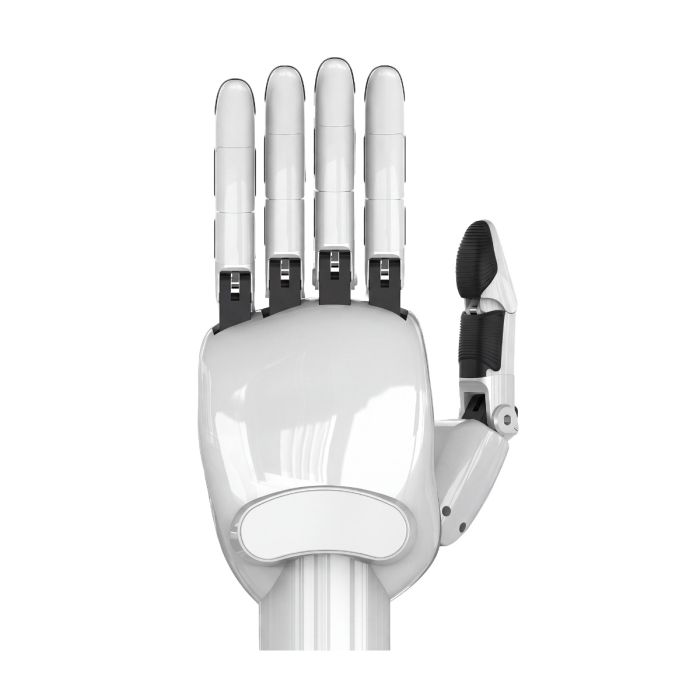
Linkerbot Linker Hand L10 Standard Version
In stock
- VÖRUMERKI:
- LINKERBOT
- HLUTI #:
- Linker Hand L10
- ORIGIN:
- Kína
- AVAILABILITY:
- SUBJECT TO AVAILABILITY
- SKU:
- Linkerbot-Linker-Hand-L10
Linkerbot Linker Hand L10 Standard Version
Linker Hand L10 Standard Version (Linker Hand L10)
As with many dexterous-hand platforms, published specifications vary by channel (manufacturer materials, conference listings, distributors, and developer documentation). However, multiple independent sources consistently describe the L10 as a high-performance, multi-DoF hand designed for in-hand manipulation, tool interaction, and research-to-industry deployments.
Design and Features
Linkage-driven dexterous hand architecture
Public descriptions of the L10 emphasize a linkage structure design (i.e., mechanically coupled linkages in the finger mechanism rather than tendon-only routing). This approach can simplify packaging, improve robustness, and reduce the tuning effort associated with cable tensioning found in many tendon-driven hands—while still supporting multi-joint finger motion for grasp diversity.
Active and passive degrees of freedom
A recurring L10 descriptor is “10 active + 10 passive DoF.” In this context, “active” typically refers to joints directly actuated by motors, while “passive” refers to joints that move through mechanical coupling, compliance elements, or under-contact behavior during grasping. This hybrid strategy is common in dexterous-hand design because it can increase adaptability to object shape without requiring a separate motor for every joint.
Multi-sensor integration options
Distributor documentation describes the L10 as having an integrated sensing suite that can include force sensing and a tactile array, and it also references optional vision-tactile or “electronic skin” style perception upgrades. While exact sensor configurations can differ by build, the consistent theme is multimodal sensing intended for contact-rich manipulation (detecting touch, slip, and applied force).
Mechanical robustness for integration
The L10 is described as using an aluminum-alloy frame and being designed to tolerate realistic manipulation loads for research and light industrial tasks. Distributor listings commonly highlight a relatively low hand mass for its capability class, supporting integration on smaller arms and mobile platforms where payload and inertia matter.
Technology and Specifications
Because different publications present different subsets of specs, the following list focuses on values repeatedly published in widely accessible technical listings and developer resources.
Kinematics and dexterity
-
Degrees of freedom: 10 active + 10 passive DoF (commonly published for the L10).
-
Manipulation emphasis: described as enabling complex in-hand manipulation and fine motor behaviors (e.g., precision grasps and tool handling).
Payload, force, and precision (published distributor figures)
A detailed distributor listing for the L10 family reports:
-
Hand mass: ~750 g
-
Payload: up to 5 kg
-
Repeatability: ±0.20 mm
-
Pinch force: 12 N
Important note on interpretation: payload and force claims can depend on grasp type (pinch vs. power grasp), lever arm (distance from palm), duty cycle, and object geometry. For procurement or system engineering, these values are typically validated against the intended use case.
Communications and software integration
A technical listing describes EtherCAT or CAN bus connectivity options and references availability of ROS 1/ROS 2 and Qt-based tooling for integration and control.
Developer documentation further supports software integration claims: the LinkerHand ROS SDK materials describe GUI-based joint control and explicitly list L10 among supported products, indicating an intended workflow for joint-level testing, recording motions, and replaying actions.
Applications and Use Cases
Robotics research and manipulation learning
Dexterous hands are frequently used in academic and industrial R&D to test grasp planning, tactile control, and learning-based manipulation. With multi-DoF fingers and published support for ROS-based toolchains, the L10 fits typical lab workflows where researchers need joint-level control, repeatable motion playback, and integration into perception stacks.
Humanoid robots and mobile manipulators
Humanoid robots and mobile manipulators benefit from dexterous hands when tasks require interaction with human-designed objects: handles, switches, tools, packaging, and irregular everyday items. The L10’s combination of active actuation and passive adaptability is aligned with real-world grasping where object pose and friction vary.
Light industrial handling and flexible automation
In production or logistics environments with variable SKUs, a dexterous hand can reduce the need for frequent tooling changes compared with task-specific grippers. Typical target tasks include:
-
picking irregular items from bins,
-
stabilizing parts during inspection,
-
repositioning objects in-hand for barcode scanning or orientation,
-
operating levers and fixtures designed for people.
The L10 is often positioned as suitable for such flexible tasks where a parallel-jaw gripper struggles, though final suitability depends on cycle time, environmental protection, and total cost of ownership.
Advantages / Benefits
Broader grasp repertoire than simple grippers
The 10 active DoF structure supports multiple grasp modes (pinch, tripod-like grasps, and broader enveloping grasps), enabling handling of irregular or deformable objects that are difficult to secure with two-finger end effectors.
Passive adaptability for real-world contact
The additional passive DoF can help the hand conform to object surfaces and maintain stable contact even when perception is imperfect or object geometry varies, improving robustness in cluttered or semi-structured environments.
Integration pathways for developers and OEMs
Published support for CAN/EtherCAT plus ROS tooling reduces friction for teams that want to prototype quickly, validate manipulation behaviors, and then harden the integration into a product or pilot deployment.
FAQ Section
What is the Linkerbot Linker Hand L10 Standard Version?
The Linker Hand L10 Standard Version is a dexterous robotic hand end effector designed for robots that need multi-finger grasping. It is commonly described as having 10 active DoF plus 10 passive DoF and a linkage-based mechanism for flexible manipulation.
How does the Linker Hand L10 work?
It uses motor-driven active joints to position fingers and passive joints/couplings to adapt to object surfaces during contact. The hand can be integrated via industrial communications such as CAN bus or EtherCAT (depending on configuration) and controlled through robotics software stacks such as ROS-based tooling.
Why is the Linker Hand L10 important?
Dexterous hands matter because they enable robots to perform tasks that require shape adaptation, in-hand repositioning, and tool interaction—capabilities that simple grippers often lack. The L10’s “10 active + 10 passive DoF” approach is intended to provide dexterity while maintaining mechanical practicality for integration.
What are the benefits of the Linker Hand L10?
Commonly published benefits include 10 active + 10 passive DoF, a linkage-based design, published payload up to 5 kg, and integration options such as CAN/EtherCAT with ROS-oriented development tooling.
Summary
The Linkerbot Linker Hand L10 Standard Version is a dexterous, linkage-driven robotic hand intended for research, humanoid integration, and flexible automation. Public sources consistently describe it as a 10 active + 10 passive DoF platform, with published distributor specifications citing up to 5 kg payload, ±0.20 mm repeatability, and CAN/EtherCAT integration options supported by ROS-oriented tooling.