
Galbot S1 Heavy Duty Wheeled Humanoid Robot
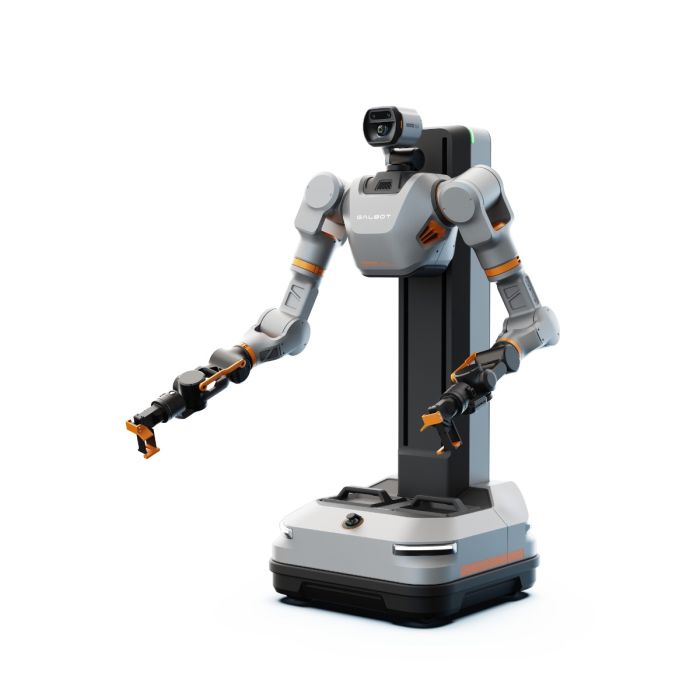
Auf Lager
- MARKE:
- GALBOT
- MODELL:
- S1
- ORIGIN:
- China
- AVAILABILITY:
- SUBJECT TO AVAILABILITY
- SKU:
- Galbot-S1
Galbot S1 Heavy Duty Wheeled Humanoid Robot
Galbot S1 Heavy-Duty Wheeled Humanoid Robot: Complete Guide
The S1's most defining specification is its 50-kilogram continuous dual-arm payload a figure Galbot describes as breaking the long-standing payload limit in the humanoid robot industry. At the time of its announcement, this placed the S1 in a category above the 20 to 25-kilogram payloads offered by most contemporary humanoid and semi-humanoid platforms, positioning the robot not merely as a dexterous manipulation tool but as a genuine heavy-material handling system capable of meaningful labor substitution in heavy industrial contexts. The S1 is deployed at CATL, the world's largest battery manufacturer, where it handles critical heavy-load tasks on active production lines under real industrial conditions. This deployment represents the primary public validation of the S1's industrial readiness — demonstrating that a humanoid robot can meet the rhythm, stability, and precision requirements of continuous battery manufacturing operations. Galbot positioned the S1 launch as marking a historic shift for embodied AI: the transition from experimental demonstrations to real-world industrial production deployment at scale.
Background and Development
Galbot was founded in May 2023 by Professor He Wang, a Stanford-trained robotics scientist at Peking University, alongside co-founder Zhang Zhizheng. The company's flagship product through 2025 was the Galbot G1 — a wheeled semi-humanoid designed for multi-environment commercial deployment across retail, pharmacy, logistics, and light manufacturing. The G1 demonstrated the commercial viability of Galbot's Sim2Real training approach and proprietary AI foundation models in customer-facing and light industrial applications.
The S1 emerged from Galbot's recognition that industrial manufacturing customers represent the highest-volume and highest-value market for humanoid robot deployment, but require capabilities that the G1's 5-kilogram arm payload was not designed to address. Heavy manufacturing — battery production, automotive assembly, materials handling, heavy logistics — involves regular movement of loads from 10 to 50 kilograms that are beyond the capability of service-oriented humanoid platforms regardless of their manipulation intelligence.
The S1 was developed to occupy a distinct position in Galbot's product portfolio: where the G1 serves retail, healthcare, logistics, and light manufacturing, the S1 addresses the heavy industrial segment through a purpose-built mechanical architecture that maintains the wheeled mobility and visual AI navigation of the G1 family while scaling payload capacity by a factor of ten.
Design and Physical Features
Heavy-Duty Wheeled Architecture
Like the Galbot G1, the S1 uses a wheeled mobile base rather than bipedal legs, reflecting Galbot's consistent engineering judgment that manufacturing floor environments — predominantly flat, with ramps and elevators for level changes — do not require the terrain versatility of bipedal locomotion but greatly benefit from the stability, energy efficiency, and mechanical simplicity of wheeled operation. The wheeled base provides a stable platform for arm operations involving 50-kilogram loads — a stability advantage that would be substantially more difficult to achieve in a bipedal system where dynamic balance must be maintained simultaneously with heavy load transfer.
The S1's design is optimized for the physical demands of heavy manufacturing: the robot's structure, actuation, and chassis are engineered for the vibration, dust, variable temperatures, and mechanical stress characteristic of active production environments such as battery manufacturing.
50-Kilogram Continuous Dual-Arm Payload
The S1's 50-kilogram continuous dual-arm payload is the specification around which the entire design is built. To contextualize this figure: the maximum recommended single-person lifting weight for repetitive tasks in most occupational health standards is 25 kilograms per lift; the Galbot S1's dual-arm system is designed to handle loads that represent the limit of safe human manual handling and substantially beyond what most contemporary service humanoids were built to carry.
The word "continuous" in Galbot's payload specification is important: this is not a peak or maximum single-lift figure, but the payload the robot can handle sustainably across an extended operational shift. This distinguishes the S1 from robots that may briefly demonstrate high-load capability in controlled demonstrations but are not rated for sustained heavy handling across industrial production cycles.
Autonomous Dual-Battery Swap System
The S1 incorporates a dual-battery quick-swap design that enables the robot to autonomously replace its own batteries without operator intervention. This autonomous battery management system is what makes 24/7 continuous operation practically achievable rather than theoretically possible the robot can continue production line duties through battery transitions without requiring a human technician to intervene.
The S1 provides up to 8 hours of continuous operation on a single charge a runtime appropriate for a full industrial shift. The autonomous swap system means the robot does not need to be returned to a charging station mid-shift; instead, it manages its own power continuity as part of its autonomous operation protocol, maintaining production throughput without human coordination of charging logistics.
Vision-Based Navigation — No QR Codes or Infrastructure Markers
The S1 navigates production environments using pure vision-based perception — a deliberate design choice that eliminates the need for QR codes, floor-embedded RFID tags, reflective markers, or other infrastructure modifications to the factory floor. This is operationally significant for manufacturing customers evaluating the S1: existing production lines can accept the robot without the floor modification projects that marker-based navigation systems require.
Galbot states that this means the S1 integrates seamlessly into existing production environments with minimal recalibration — the robot maps its environment visually and navigates autonomously from the moment of deployment. The practical deployment speed this enables is a meaningful commercial advantage in manufacturing settings where any production line modification carries downtime cost.
360-Degree Omnidirectional Obstacle Avoidance
The S1 features 360-degree omnidirectional obstacle avoidance — the robot's perception system covers the full surrounding environment, enabling it to detect and respond to human workers, moving equipment, material trolleys, and other dynamic obstacles in all directions simultaneously. This full-perimeter awareness is essential for safe co-working in active factory environments where forklifts, automated guided vehicles, and human workers share space with the robot.
Galbot positions the 360-degree avoidance capability as a primary safety feature enabling the S1 to operate alongside human colleagues without requiring the physical separation or safety caging that traditional industrial robots demand.
Technology and AI Systems
Embodied Handling Model
The S1's material handling intelligence is governed by Galbot's embodied handling model a proprietary AI system specifically developed for heavy industrial manipulation tasks. Unlike the GroceryVLA retail model used in the G1 for consumer goods handling, the S1's embodied handling model is trained for the load characteristics, handling patterns, and precision requirements of industrial manufacturing workflows: moving battery cells, handling automotive subassemblies, loading and unloading processing equipment, and transporting materials between production stages.
Galbot describes the embodied handling model as enabling complex material handling tasks with high precision. The precision requirement for industrial manufacturing is substantially more demanding than for retail Galbot co-founder Zhang Zhizheng has noted that factories demand unwavering accuracy between 99.9 and 99.99 percent, a target that requires billions of data points to achieve robust generalization.
Sim2Real Training
Like all Galbot AI systems, the S1's embodied handling model is trained through Galbot's Sim2Real methodology: massive pre-training on large-scale synthetic simulation data generated through NVIDIA Isaac Sim, followed by targeted fine-tuning with real-world industrial interaction data. This training pipeline enables Galbot to build training datasets at the hundreds-of-billions scale required for the precision and generalization targets of industrial deployment, while managing the data collection economics that make such datasets viable.
Galbot claims its Sim2Real approach achieves training efficiency approximately 1,000 times higher than conventional approaches, with a model success rate of 99 percent — enabling the rapid iteration of AI capabilities across new manufacturing contexts as the company expands its industrial partnership network.
Zero Teleoperation Operation
Like the G1, the S1 operates with full autonomy — no teleoperation or remote human supervision is required during industrial deployment. The robot independently perceives its environment, plans its routes, selects and executes manipulation strategies, and manages its battery system without operator intervention. This full autonomy is what enables the 24/7 continuous operation model that makes the S1 economically viable as a manufacturing labor supplement.
Technology and Specifications
Core Specifications at a Glance
| Specification | Value |
|---|---|
| Payload Capacity | 50 kg continuous dual-arm |
| Battery Runtime | Up to 8 hours per charge |
| Battery Management | Dual-battery autonomous quick-swap |
| Operational Mode | Fully autonomous (no teleoperation) |
| Navigation | Pure vision-based (no QR codes or markers) |
| Obstacle Avoidance | 360-degree omnidirectional |
| Mobility | Wheeled omnidirectional base |
| AI System | Proprietary embodied handling model |
| Training Methodology | Sim2Real (NVIDIA Isaac Sim + real-world fine-tuning) |
| Commercial Deployment | CATL battery production lines (active) |
| R&D Centers | Beijing, Shenzhen, Suzhou, Hong Kong |
Commercial Deployment: CATL Battery Production Lines
The primary validation of the Galbot S1 is its operational deployment at CATL (Contemporary Amperex Technology Co., Ltd.) — the world's largest battery manufacturer, responsible for supplying battery cells and packs to automotive customers including Tesla, BMW, Volkswagen, Hyundai, and hundreds of other global vehicle programs. Battery manufacturing is one of the most demanding manufacturing environments for robotic automation: it requires handling cells and modules with precise force control to avoid damage to sensitive electrochemical components, sustained operation across high-volume production cycles, and reliable performance in environments with electrolyte vapors, dust, and temperature variation.
CATL's acceptance of the S1 into active production lines — handling critical heavy-load tasks rather than peripheral operations — represents meaningful third-party validation of the robot's industrial readiness. Galbot notes that this deployment validates the S1's ability to meet the stringent rhythm and stability requirements of advanced manufacturing, where production rate consistency directly affects plant output targets and any downtime from robot failures has measurable cost implications.
CATL is also an investor in Galbot, having participated as the core strategic investor in Galbot's mid-2025 funding round. The depth of the CATL relationship — spanning capital investment, joint technology development, and production deployment — provides Galbot with a uniquely demanding and globally recognized reference customer for the S1's industrial capabilities.
Applications and Use Cases
Battery Manufacturing
At CATL and other battery production facilities, the S1 handles the heavy-load material movement tasks that are otherwise performed by human workers or purpose-built fixed automation: moving battery modules between production stages, loading and unloading processing equipment, transporting materials within the production floor, and handling packaging and shipping preparation. The S1's 50-kilogram payload covers the weight range of standard battery modules and subassemblies that manufacturing workers handle daily with significant ergonomic cost.
Automotive Manufacturing
Galbot has secured partnerships with Toyota, BAIC Group, SAIC Group, and Zeekr for exploring humanoid robot deployment in automotive manufacturing environments. In automotive production, heavy-load tasks include parts delivery to assembly workstations, moving doors, hoods, and major subassemblies during assembly sequences, handling finished goods, and managing material supply flows between storage and production areas.
The S1's combination of heavy payload, visual navigation without floor modifications, 360-degree safety awareness, and autonomous continuous operation addresses the practical requirements of automotive manufacturing lines where production rate, safety, and floor flexibility are primary concerns.
Bosch Partnership — High-Precision Manufacturing
Galbot has formed a joint venture with Boyuan Capital, the investment arm of the Bosch Group, focused on applying embodied AI in high-precision manufacturing. The joint venture, called the Boyin Innovation Alliance, targets complex assembly tasks in Bosch's global manufacturing network that require the combination of heavy handling capability and precision placement that the S1 is designed to deliver.
General Heavy Industrial Material Handling
Beyond battery and automotive manufacturing, the S1's 50-kilogram payload, visual navigation, and autonomous operation make it applicable to any heavy industrial environment where material handling tasks involve loads in the 10 to 50-kilogram range: electronics manufacturing, aerospace component handling, chemical and process industry material movement, food manufacturing, and heavy logistics sorting.
Advantages and Benefits
50-Kilogram Continuous Payload Breaks Industry Norms: The S1's payload specification substantially exceeds the 5 to 25-kilogram range of most contemporary humanoid and semi-humanoid platforms, enabling the robot to address the heavy material handling tasks that represent a large portion of manufacturing labor demand but have been out of reach for lighter-payload manipulation robots.
8-Hour Runtime Plus Autonomous Battery Swap for 24/7 Operation: The combination of an 8-hour operational charge and the ability to autonomously replace batteries eliminates downtime from power management across continuous production schedules — the robot manages its own power continuity without requiring human intervention to maintain uninterrupted operation.
No Infrastructure Modification Required: Pure vision-based navigation without QR codes or floor markers means the S1 can be deployed into an existing production line without the costly and time-consuming modifications that marker-based navigation systems require, reducing deployment friction and accelerating the time from hardware delivery to productive operation.
360-Degree Safety Awareness for Human-Shared Production Environments: Full-perimeter obstacle detection enables the S1 to operate safely alongside human workers and factory equipment without requiring physical separation through caging or segregated work areas, preserving the flexibility that makes humanoid robots more versatile than fixed industrial systems.
CATL Production Line Validation: Deployment in CATL's production lines — under real manufacturing conditions rather than controlled demonstrations — provides manufacturing buyers with a reference validation that few competing platforms can match. The world's largest battery manufacturer operating the S1 in production is a meaningful proof point for other manufacturing procurement teams evaluating the robot's reliability.
Full Autonomy Without Teleoperation: The S1's autonomous operation model — making all navigation, manipulation, and battery management decisions independently — enables genuine staffless operation across its deployment tasks, distinguishing it from systems that require remote human supervision during industrial operation.
Comparison with Related Platforms
Galbot S1 vs. Galbot G1: The G1 is Galbot's multi-environment commercial service platform, with a 5-kilogram arm payload optimized for retail, pharmacy, healthcare, and light logistics. The S1 is Galbot's dedicated industrial heavy-handling platform, with a 50-kilogram continuous payload and 8-hour runtime specifically calibrated for manufacturing production line demands. The two robots share Galbot's Sim2Real AI training methodology and wheeled navigation approach but target fundamentally different deployment contexts and load requirements.
Galbot S1 vs. AgiBot G2: The AgiBot G2 is an industrial wheeled humanoid with 7-DOF force-controlled arms achieving sub-millimeter assembly precision with 0.5-Newton accuracy, validated at Longcheer Technology's tablet production line at 310 units per hour and 99.9 percent success rate. The G2 targets precision electronics assembly where sub-millimeter accuracy and lightweight component handling are the primary requirements. The S1 targets heavy manufacturing where 50-kilogram continuous payload capacity is the defining requirement. The two platforms address different tiers of the industrial manufacturing spectrum.
Galbot S1 vs. Agility Robotics Digit: Agility Robotics Digit is a bipedal warehouse humanoid priced at approximately $250,000 and deployed by Amazon for tote handling, with a payload capacity in the range of approximately 16 kilograms. The S1's 50-kilogram continuous payload substantially exceeds Digit's handling capacity for heavy industrial material handling, while Digit's bipedal locomotion enables access to stairways and multi-floor facilities the wheeled S1 cannot independently navigate. For flat-floor heavy manufacturing, the S1's payload advantage is directly relevant; for multi-floor warehouse environments, Digit's bipedal access offers deployment flexibility.
Frequently Asked Questions (FAQ)
What is the Galbot S1? The Galbot S1 is an industrial-grade heavy-duty wheeled humanoid robot developed by Beijing Galbot AI Co., Ltd. Launched in January 2026, it features a 50-kilogram continuous dual-arm payload — the highest in its category at time of launch — along with up to 8 hours of operational runtime, an autonomous dual-battery quick-swap system for 24/7 operation, pure vision-based navigation without QR codes or floor markers, and 360-degree omnidirectional obstacle avoidance. It is fully autonomous, operates without teleoperation, and is currently deployed on active production lines at CATL, the world's largest battery manufacturer.
How does the Galbot S1 work? The S1 navigates factory floors using pure visual perception — processing camera data through Galbot's navigation AI to map its environment, plan routes, and avoid obstacles without requiring floor-embedded markers or QR codes. Its proprietary embodied handling AI model governs dual-arm manipulation tasks, enabling it to handle loads up to 50 kilograms with the precision and consistency required for manufacturing production cycles. The robot manages its own battery transitions using an autonomous dual-battery quick-swap mechanism, replenishing power independently when needed. All operations — navigation, manipulation, and power management — run autonomously without human supervision or remote teleoperation.
What is the Galbot S1's payload capacity, and why does it matter? The Galbot S1 provides a continuous dual-arm payload of 50 kilograms — the heaviest continuous payload available in a commercially deployed semi-humanoid robot at the time of its January 2026 launch. Most humanoid and semi-humanoid platforms are rated for 5 to 25 kilograms, which covers light manipulation tasks but excludes the heavy material handling that represents a large portion of manual labor in battery manufacturing, automotive production, and heavy logistics. The S1's 50-kilogram rating brings humanoid robot capability into the range of tasks that currently require dedicated fixed automation or human workers operating at the limits of safe manual handling guidelines.
Where is the Galbot S1 currently deployed? The Galbot S1 is actively deployed on core production lines at CATL, the world's largest battery manufacturer, where it handles critical heavy-load tasks under real industrial production conditions. Galbot has announced partnerships with Bosch (through the Boyin Innovation Alliance joint venture), Toyota, BAIC Group, SAIC Group, and Zeekr to expand S1 deployment across automotive and high-precision manufacturing environments. For enterprise deployment inquiries, contact Galbot through galbot.com.
How does the Galbot S1 differ from the Galbot G1? The Galbot G1 is a multi-environment commercial service robot with a 5-kilogram arm payload, designed for retail stores, pharmacies, hospitals, warehouses, and light manufacturing. It features a 10-hour battery runtime, 47 total degrees of freedom, and AI models (GraspVLA, GroceryVLA, TrackVLA) optimized for retail and commercial service contexts. The Galbot S1 is a dedicated industrial heavy-handling robot with a 50-kilogram continuous dual-arm payload, 8-hour runtime with autonomous battery swap, and an embodied handling AI model specifically developed for heavy manufacturing material handling. The S1 trades the G1's multi-environment versatility for specialized heavy-load industrial capability, targeting factory production lines rather than retail or service deployments.
Summary
The Galbot S1 Heavy-Duty Wheeled Humanoid Robot represents the most commercially validated heavy-payload humanoid robot platform available as of early 2026. Its 50-kilogram continuous dual-arm payload breaks the performance ceiling of the humanoid robot industry, its autonomous dual-battery swap system enables practical 24/7 industrial operation, and its active deployment at CATL's battery production lines provides manufacturing buyers with a reference validation at the world's most demanding battery production scale. Backed by Galbot's Sim2Real training methodology, proprietary embodied handling AI, and pure vision-based navigation that eliminates infrastructure modifications, the S1 addresses the heavy material handling tier of industrial manufacturing with a platform that is already operational rather than aspirationally designed. For manufacturers in battery production, automotive assembly, and heavy industrial material handling evaluating humanoid robot deployment for production labor supplementation, the Galbot S1 is the most concretely substantiated heavy-payload option currently available.