
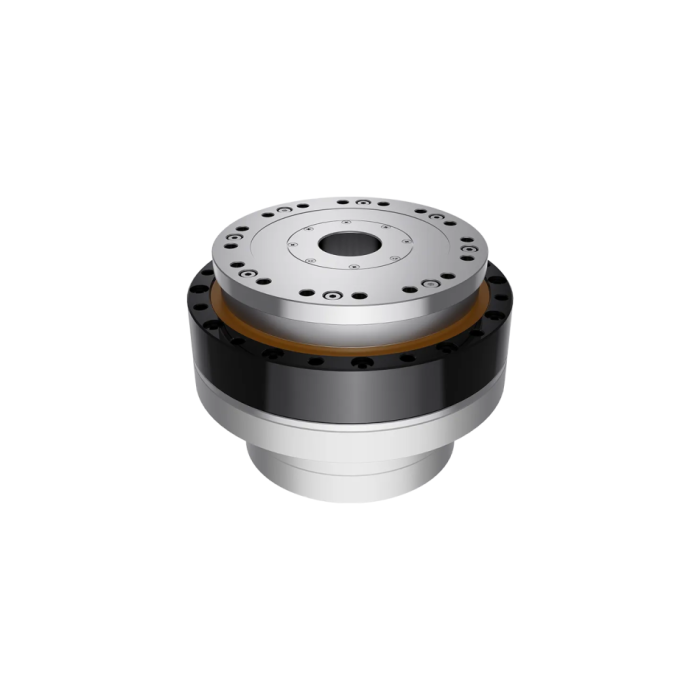
Ti5 Robotics 110-170 Lightweight Joint Module
Auf Lager
- MARKE:
- TI5 ROBOTICS
- MODELL:
- 110-170
- ORIGIN:
- China
- Warranty:
- 12 MONATE
- AVAILABILITY:
- SUBJECT TO AVAILABILITY
- SKU:
- Ti5-Robotics-Joint-Module-110-170
Ti5 Robotics 110-170 Lightweight Joint Module
Ti5 Robotics 110-170 Lightweight Joint Module is a modular, highly integrated rotary actuator family designed for robots that demand high torque in a compact, lightweight package. The manufacturer positions the 110-170 as a building block for modern intelligent equipment: its modularity supports flexible assembly and straightforward maintenance, the lightweight structure improves mobility and energy efficiency, and the integrated layout concentrates motor, gearing, encoder, and drive electronics into a single joint unit. The family is offered in four versions and five gear ratios, so performance characteristics vary by configuration rather than being a single fixed specification. This page describes the whole model family, its documented variants, and how to choose among them.
Background
Integrated joint modules in modern robotics
Robot builders increasingly rely on integrated joint modules instead of assembling motors, reducers, encoders, and drives from separate components. A ready-made joint shortens development time, reduces alignment and tolerance risk, and keeps the mechanical envelope predictable across every axis of a machine. The 110-170 follows this approach: each unit is a self-contained actuator with a hollow shaft for routing cables through the joint, a high-resolution encoder for position feedback, and a standard communication bus so multiple joints can be daisy-chained on one network. For humanoid platforms and articulated arms, this integration directly affects payload, reach, and serviceability.
The 110-170 family and its four versions
The source documentation lists four joint versions: CRA-RI110-170-PRO-2-XXX, CRA-RI110-170-PRO-2-XXX-B, CRA-RI110-170-PRO-2-XXX-2E-EC, and CRA-RI110-170-PRO-2-XXX-B-2E-EC. The first three are published with full parameter tables; the fourth (-B-2E-EC) is listed with a drawing reference but without a published parameter table, so its figures are not reproduced here. The -B versions are longer and heavier than the base unit, and the -2E-EC designation adds EtherCAT alongside CAN with a 16/18-bit encoder option. Within every published version, torque, speed, and backlash depend on the selected gear ratio (51, 81, 101, 121, or 161), so no single torque or speed figure represents the whole family.
Technical Specifications
The following tables preserve the published configuration distinctions. Blank, malformed, or ambiguous source values are not confirmation of a capability; confirm the selected configuration during quotation.
CRA-RI110-170-PRO-2-XXX
| Gear Ratio | Peak Torque (N.m) | Max Allowable Torque At Average Load (N.m) | Rated Torque @ 2000RPM (N.m) | Peak Speed (RPM) | Rated Speed (With 1/2 Rated Torque) (RPM) | Gear Backlash (arcsec) |
| 51 | 497 | 242 | 169 | 33 | 22 | 20 |
| 81 | 641 | 351 | 255 | 21 | 15 | 20 |
| 101 | 702 | 460 | 328 | 16 | 12 | 10 |
| 121 | 762 | 557 | 363 | 14 | 10 | 10 |
| 161 | 800 | 557 | 363 | 10 | 7 | 10 |
| Rated Power(W) | Supply Voltage(V) | Max Continuous Current(A) | Rated Current(A) | Torque Constant (N.m/A) | Encoder Resolution (bit) | Communication Bus |
| 1500 | 24-48 | 30.2 | 14.1 | 0.293 | 16 | CAN |
| Hollow Shaft(mm) | Length(mm) | Mass(kg) | Inertia(g * c㎡) |
| 40 | 121.7±0.5 | 6.84 | 8333.3 |
CRA-RI110-170-PRO-2-XXX-B
| Gear Ratio | Peak Torque (N.m) | Max Allowable Torque At Average Load (N.m) | Rated Torque @ 2000RPM (N.m) | Peak Speed (RPM) | Rated Speed (With 1/2 Rated Torque) (RPM) | Gear Backlash (arcsec) |
| 51 | 497 | 242 | 169 | 33 | 22 | 20 |
| 81 | 641 | 351 | 255 | 21 | 15 | 20 |
| 101 | 702 | 460 | 328 | 16 | 12 | 10 |
| 121 | 762 | 557 | 363 | 14 | 10 | 10 |
| 161 | 800 | 557 | 363 | 10 | 7 | 10 |
| Rated Power(W) | Supply Voltage(V) | Max Continuous Current(A) | Rated Current(A) | Torque Constant (N.m/A) | Encoder Resolution (bit) | Communication Bus |
| 1500 | 24-48 | 30.2 | 14.1 | 0.293 | 16 | CAN |
| Hollow Shaft(mm) | Length(mm) | Mass(kg) | Inertia(g * c㎡) |
| 40 | 147.7±0.5 | 7.52 | 10709.2 |
CRA-RI110-170-PRO-2-XXX-2E-EC
| Gear Ratio | Peak Torque (N.m) | Max Allowable Torque At Average Load (N.m) | Rated Torque @ 2000RPM (N.m) | Peak Speed (RPM) | Rated Speed (With 1/2 Rated Torque) (RPM) | Gear Backlash (arcsec) |
| 51 | 497 | 242 | 169 | 33 | 22 | 20 |
| 81 | 641 | 351 | 255 | 21 | 15 | 20 |
| 101 | 702 | 460 | 328 | 16 | 12 | 10 |
| 121 | 762 | 557 | 363 | 14 | 10 | 10 |
| 161 | 800 | 557 | 363 | 10 | 7 | 10 |
| Rated Power(W) | Supply Voltage(V) | Max Continuous Current(A) | Rated Current(A) | Torque Constant (N.m/A) | Encoder Resolution (bit) | Communication Bus |
| 1500 | 24-48 | 30.2 | 14.1 | 0.293 | 16/18 | CAN/EtherCAT |
| Hollow Shaft(mm) | Length(mm) | Mass(kg) | Inertia(g * c㎡) |
| 40 | 124.5±0.5 | 6.87 | 9689.83 |
How do the four versions of the 110-170 differ?
The differences are mechanical and interface-related rather than performance-related. The base CRA-RI110-170-PRO-2-XXX is the shortest and lightest documented unit at 121.7 mm and 6.84 kg. The -B version extends the housing to 147.7 mm and 7.52 kg with higher rotor inertia, while keeping the same electrical ratings and CAN bus. The -2E-EC version stays close to the base dimensions (124.5 mm, 6.87 kg) but adds EtherCAT alongside CAN and offers a 16/18-bit encoder option, which suits systems built around deterministic EtherCAT motion networks. The -B-2E-EC version combines the extended-housing designation with the EtherCAT designation, but the manufacturer has not published its parameter table, so specifications for that configuration should be confirmed directly before design-in. In all documented versions, output torque and speed are set by the gear ratio you order, ranging from 497 N.m peak at 33 RPM (ratio 51) to 800 N.m peak at 10 RPM (ratio 161).
Who is the Ti5 Robotics 110-170 Lightweight Joint Module for?
This joint module family targets robotics engineers and integrators building machines that need several hundred newton-metres of joint torque: humanoid robot developers working on hip, knee, or torso axes; collaborative robot arm designers specifying base and shoulder joints; and research groups at universities or corporate labs prototyping articulated systems. It also suits automation builders who prefer buying a complete, tested joint over engineering a motor-reducer-encoder stack themselves. Buyers should be comfortable with CAN or EtherCAT motion control and with sizing actuators from gear-ratio-dependent torque-speed data.
What is the Ti5 Robotics 110-170 Lightweight Joint Module used for?
The manufacturer lists the following application areas for its joint modules:
- Humanoid robot joints, where high torque density and a hollow shaft for cable routing are essential.
- Collaborative robot arms, particularly high-load axes such as the base and shoulder.
- Industrial production equipment that requires compact, integrated rotary actuation.
- Scientific research and education platforms, from single-joint testbeds to full articulated prototypes.
- Medical and rehabilitation robotics development programs that need precise, repeatable joint motion.
- Commercial-scenario service robots where weight, space, and energy efficiency drive actuator selection.
Pricing and Availability
Pricing for the 110-170 family depends on the version, gear ratio, and order quantity, so it is quoted per configuration rather than published as a list price. To receive current pricing and lead time, submit a quote request with the exact model code you need, including the gear ratio suffix. Our team will confirm configuration details, availability, and commercial terms for your project.
Frequently Asked Questions
What gear ratios are available for the 110-170 joint module?
Five ratios are documented: 51, 81, 101, 121, and 161. Higher ratios increase peak torque (up to 800 N.m at ratio 161) while reducing peak speed (down to 10 RPM); lower ratios favour speed over torque.
What communication interfaces does it support?
The base and -B versions use a CAN bus. The -2E-EC version supports CAN/EtherCAT, making it suitable for EtherCAT-based motion control architectures.
What encoder resolution does the module provide?
Documented versions use a 16-bit encoder; the -2E-EC version is listed with a 16/18-bit option.
What supply voltage and power does it require?
Published versions are rated at 1500 W with a 24-48 V supply, 14.1 A rated current, and 30.2 A maximum continuous current.
Does the module have a hollow shaft?
Yes. All documented versions include a 40 mm hollow shaft, which allows cabling and lines to pass through the centre of the joint.
Is the 110-170 suitable for humanoid robots?
Yes. The manufacturer supplies these actuator modules for humanoid robot integration, and the torque range covers high-load axes. Final suitability depends on your platform's torque, speed, and mass budget per joint.
Where can I buy the Ti5 Robotics 110-170 Lightweight Joint Module and what does it cost?
You can order it through this listing. Because pricing varies by version, gear ratio, and quantity, submit a quote request with your required configuration and we will respond with current pricing and delivery details.
Summary
The Ti5 Robotics 110-170 Lightweight Joint Module is a high-torque, integrated actuator family offered in four versions and five gear ratios, with documented peak torque from 497 to 800 N.m, a 40 mm hollow shaft, 16-bit (or 16/18-bit) encoders, and CAN or CAN/EtherCAT communication. Three versions carry full published specifications, while the -B-2E-EC configuration should be confirmed with the manufacturer. For specifying the right version and ratio for your robot, this page is the starting point.