
Unitree Go2 X Robot Dog
На залихама
- БРАНД:
- UNITREE ROBOTICS
- МОДЕЛ:
- GO2-X
- ДЕО #:
- GO2-X
- ORIGIN:
- Кина
- Warranty:
- 12 МЕСЕЦИ
- AVAILABILITY:
- SUBJECT TO AVAILABILITY
- SKU:
- Unitree-GO2-X
Buy now, pay later
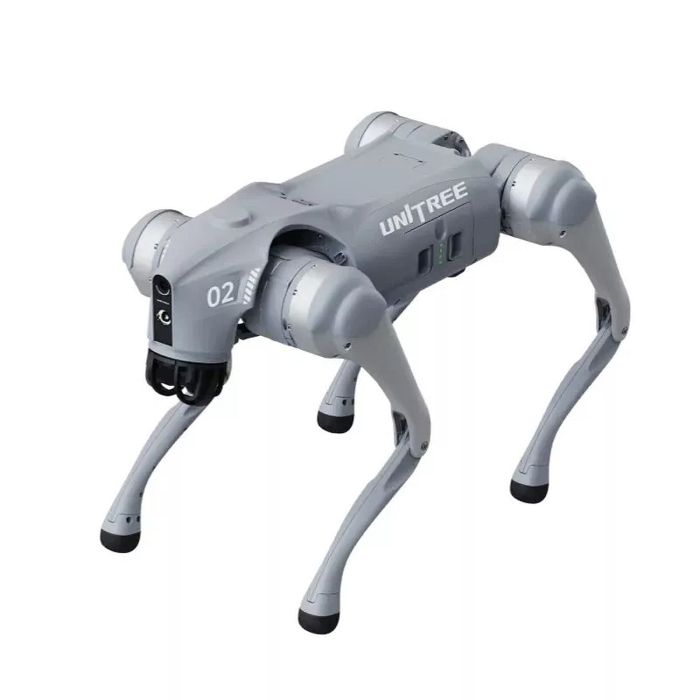
Unitree Go2 X Robot Dog
Three point seven metres per second, bursts to around five, and a maximum payload of twelve kilograms. The X sits above the Pro in the Go2 range, and if you are going to load this robot or run it hard, that is where the difference shows.
What it is
The Unitree Go2 X is a higher-performance configuration of Unitree's second-generation quadruped: about 15 kg, a top speed of 3.7 m/s with roughly 5 m/s available in bursts, a working payload of about 8 kg with up to roughly 12 kg maximum, an 8,000 mAh battery and multi-sensor perception including Unitree's 4D LiDAR.
What the X adds over the Pro
Two documented differences: a slightly higher sustained speed with a meaningful burst capability, and a maximum payload raised from about 10 kg to about 12 kg. Whether that justifies the step up depends entirely on your application — if the robot carries a sensor package near the limit, the extra two kilograms matter a great deal; if it carries a camera and nothing else, they do not. Published material concentrates on those figures rather than setting out the full configuration difference, so ask us to confirm in writing what else is included before you pay the premium. We would rather have that conversation than sell you the dearer robot by default.
Where the Go2 Pro sits in the range
The Go2 comes in four tiers that share one 15-kilogram chassis. What changes is speed, payload, battery and — on the EDU — development access.
| Tier | Speed | Payload | Battery |
|---|---|---|---|
| Go2 Air | 2.5 m/s | About 7 kg, up to about 10 kg | 8,000 mAh, 1 to 2 hours |
| Go2 Pro | 3.5 m/s | About 8 kg, up to about 10 kg | 8,000 mAh, 1 to 2 hours |
| Go2 X | 3.7 m/s, about 5 m/s burst | About 8 kg, up to about 12 kg | 8,000 mAh, 1 to 2 hours |
| Go2 EDU | 3.7 m/s, about 5 m/s burst | About 8 kg, up to about 12 kg | 15,000 mAh, 2 to 4 hours |
Two things are worth noticing in that table. The jump from Air to Pro is a full metre per second of speed for a modest step in price, which is why the Pro rather than the Air is the usual starting point for serious work. And the EDU is the only tier with the larger 15,000 mAh battery as standard — that pack is also sold separately and fits the others, so a long runtime does not by itself require buying the EDU.
Published sources vary slightly on which 4D LiDAR each tier carries, so confirm the sensor on your quotation rather than assuming it from the tier name.
Unitree Go2 X specifications
| Specification | Value |
|---|---|
| Weight | About 15 kg |
| Payload | About 8 kg, up to about 12 kg maximum |
| Top speed | 3.7 m/s, with about 5 m/s in bursts |
| Battery | 8,000 mAh — 1 to 2 hours depending on use |
| Perception | Multi-sensor, with Unitree 4D LiDAR options — confirm the sensor on your quotation |
| Tier | Go2 X — higher-performance configuration |
Figures follow published specifications and vary by production batch. Confirm the exact configuration and sensor package on your quotation before ordering.
Who buys it
- Work where the payload runs near the limit
- Applications needing higher sustained and burst speed
- Research requiring more headroom than the Pro provides
- Inspection and survey with a heavier sensor package
- Buyers who have confirmed the X configuration suits their task
How to choose
Buy the X if you need the higher maximum payload or the extra speed. Save money with the Pro if neither is a binding constraint — the chassis and battery are the same. Move to the EDU if you need development access and the larger battery as standard. Compare the whole field in our robot dogs and quadrupeds category.
Safety and handling
A 15-kilogram quadruped moving at 3.5 metres per second carries real momentum. It is research and commercial equipment, not a consumer toy, and the industrial robot safety standards do not cover it, so the duty of care sits with the operator.
Keep a trained operator with the controller and stop function within reach whenever the robot is powered, keep bystanders out of its path at speed, and complete a written risk assessment before operating anywhere the public can reach. Lithium batteries are regulated dangerous goods in transit, which affects how spares ship and how quickly.
Deployment and running costs
Runtime is the thing to plan around: one to two hours on the standard 8,000 mAh pack, depending on how hard the robot works. A spare pack is the cheapest useful upgrade, and the 15,000 mAh long-range battery is sold separately if you want closer to the EDU tier's endurance. Foot pads and protective brackets are genuine consumables on a robot that works outdoors or is handled by students. Related parts are listed under robot accessories. International buyers should add duty and import charges.
Import and delivery
Units ship from the manufacturer and lead times follow production batches rather than a fixed schedule. Lithium batteries restrict some routes and add documentation, though at about 15 kg this is one of the easier robots to ship. Tell us the destination country when you enquire and we will confirm delivered cost, a realistic lead time and the paperwork required before you commit.
Support before and after the sale
Before you buy, our team will confirm the tier and the sensor package against the work you intend to do — published sources differ on which LiDAR each Go2 tier carries, so we put that in writing rather than leaving it to the tier name. After delivery, we help with training, set up and ongoing support.
Where to buy
This item is listed above with current price and availability, alongside the rest of the Go2 Pro range and its accessories. Order directly, or contact our team for a formal quotation including delivery to your country. Universities and institutions buying against a purchase order or a grant should request a written quotation first.
Frequently asked questions
How much does a Unitree Go2 X cost?
Current pricing is shown on the listing above. Request a quotation for delivered pricing or quantities.
What is the difference between the Go2 Pro and the Go2 X?
The documented differences are speed, 3.7 m/s with about 5 m/s burst against 3.5 m/s, and maximum payload, about 12 kg against about 10 kg. Published material does not set out the full configuration difference, so ask us to confirm it in writing.
Is the X worth the step up from the Pro?
Only if the higher payload or the extra speed matters to your application. If neither does, the Pro is the same chassis for less and we will tell you so.
How much can a Go2 carry?
About 8 kg as a working payload on the Pro, up to roughly 10 kg maximum. The X and EDU tiers raise the maximum to about 12 kg.
How long does the battery last?
One to two hours on the standard 8,000 mAh pack, depending on how hard the robot works. The 15,000 mAh long-range pack is sold separately and roughly doubles that.
How heavy is the robot?
About 15 kg across the Go2 family.
Which LiDAR does it have?
Unitree 4D LiDAR, though published sources vary on which unit ships with which tier. Ask us to confirm the sensor on your quotation.
Do you ship internationally?
Yes. Lithium batteries affect routing and lead time, so confirm the destination country when you enquire.