
BrainCo Revo 1 Intelligent Dexterous Bionic Hand
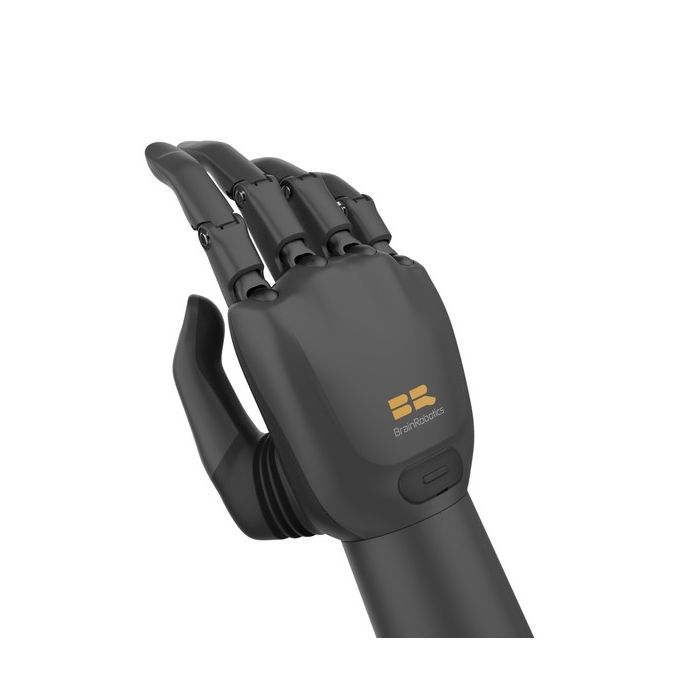
The BrainCo Revo 1 Intelligent Dexterous Bionic Hand is a robotic dexterous hand platform from BrainCo, a brain-computer-interface and human-machine-interface company that publicly lists “BrainCo Bionic Dexterous Hand Revo1” among its product lines on its official website. BrainCo positions itself as a company working across bionic hands, bionic knees, neurotechnology, and AI-oriented robotics solutions.
In stock
- BRAND:
- BRAINCO
- PART #:
- Intelligent Dexterous Bionic Hand
- ORIGIN:
- China
- Warranty:
- 12 MONTHS
- AVAILABILITY:
- SUBJECT TO AVAILABILITY
- SKU:
- BrainCo-Dexterous-Bionic-Hand
BrainCo Revo 1 Intelligent Dexterous Bionic Hand
The BrainCo Revo 1 Intelligent Dexterous Bionic Hand is a multi-joint robotic hand platform from BrainCo, a company built around brain-computer interfaces and human-machine interaction technology. Rather than a simple two-finger industrial gripper, the Revo 1 is designed to approximate the functional role of a human hand: published specifications describe six active joints, CANfd and RS485 connectivity, support for secondary development, and a maximum payload rating of 30 kg. Sitting at the intersection of bionic-hand engineering, rehabilitation-oriented human-machine interfaces, and dexterous robotic manipulation, it addresses buyers in medical and rehabilitation-adjacent fields, education, and robotics development who need a hand, not just a clamp.
Background
BrainCo is publicly positioned as a brain-computer-interface and human-machine-interface company whose product lines span bionic hands, bionic knees, neurotechnology, and AI-oriented robotics, and it lists the Bionic Dexterous Hand Revo 1 among its official products.
Why dexterous hands instead of grippers
BrainCo's own published material on dexterous hands argues that traditional industrial grippers struggle with dynamic environments, flexible objects, delicate operations, and rich physical interaction, while dexterous hands aim to replicate more of the human hand's flexibility and sensory role. That framing explains the Revo 1's design intent: multi-finger grasping, more varied object handling, and more human-like interaction than a standard end-of-arm tool. With six active joints, the Revo 1 can articulate grasp patterns a parallel gripper cannot, which matters for research into manipulation, for humanoid platforms that need anthropomorphic hands, and for assistive-technology contexts where objects are shaped for human fingers.
A product between rehabilitation and robotics
One notable nuance in the public record is that BrainCo's English product page for the Revo 1 carries a title referencing a single-hand rehabilitation robot and stroke recovery, while the same official site navigation labels the product as the Bionic Dexterous Hand Revo 1. Reseller listings, meanwhile, categorize the Revo 1 as a hand-type robot with a medical use category. The safest characterization, therefore, is that the Revo 1 spans both worlds: it is marketed within BrainCo's rehabilitation-adjacent and assistive-technology ecosystem while functioning technically as a developer-integrable dexterous robotic hand. Buyers should note that clinical suitability for any therapy or rehabilitation application depends on professional protocols and the regulatory context in the deploying jurisdiction, and this page makes no medical-outcome claims.
Technical Specifications
The most consistently published specifications for the BrainCo Revo 1 are summarized below.
| Attribute | Specification |
|---|---|
| Brand / model | BrainCo / Revo 1 |
| Product type | Intelligent dexterous bionic hand (hand-type robot) |
| Listed use category | Medical / rehabilitation-adjacent, education, robotics development |
| Active joints | 6 |
| Connectivity | CANfd, RS485 |
| Secondary development | Supported |
| Maximum payload | 30 kg (rating per reseller listings) |
| Positioning | Bionic-hand technology, human-machine interfaces, dexterous manipulation |
These figures are compiled from reseller listings and BrainCo's public materials; the manufacturer's English specification page is sparse, so parameters such as payload conditions, weight, dimensions, and grip-force details should be confirmed with current official documentation during quotation.
What makes the BrainCo Revo 1 development-friendly?
A recurring feature across Revo 1 listings is explicit support for secondary development, paired with CANfd and RS485 connectivity. These are industrial and robotics-integration interfaces rather than consumer plug-and-play standards, which strongly indicates the Revo 1 is meant to be wired into larger systems: robot arms needing an anthropomorphic end-effector, humanoid platforms, laboratory rigs, prosthetic-control experiments, and custom automation cells. CANfd offers the high-bandwidth, deterministic bus communication favored in modern robot joints, while RS485 provides a robust, widely supported serial fallback for simpler controllers. For a research group, this means the Revo 1 can be commanded from existing motion-control infrastructure without exotic hardware, and its six active joints can be addressed programmatically to study grasp synthesis, object manipulation, and human-hand-like interaction. This integration-first character is an inference drawn from the consistently listed interfaces and developer-oriented sales language, and it is what separates the Revo 1 from purely cosmetic robotic hands.
How does the Revo 1 fit into rehabilitation and assistive technology?
BrainCo's broader identity — brain-computer interfaces, bionic limbs, and neurotechnology — places the Revo 1 within an ecosystem aimed at restoring or augmenting human capability, and its official page title references single-hand rehabilitation and stroke recovery. At the same time, the publicly crawlable content behind that page is limited, so this listing does not assert specific therapeutic functions, clinical outcomes, or approvals. What can be said responsibly is that a dexterous, developer-accessible bionic hand is a natural building block for rehabilitation-adjacent research: human-machine-interface experiments, prosthetic control studies, and assistive-device prototyping. Any clinical deployment remains the responsibility of qualified professionals, since suitability depends on professional protocols and the regulatory requirements that apply where the device is used.
Who is the BrainCo Revo 1 Intelligent Dexterous Bionic Hand for?
The Revo 1 addresses robotics research groups needing an anthropomorphic end-effector, universities teaching manipulation and human-machine interaction, humanoid and service-robot developers seeking a human-like hand module, and medical-technology or rehabilitation-engineering teams prototyping assistive interfaces under appropriate professional oversight. It also suits R&D departments evaluating dexterous manipulation for tasks where conventional grippers fail. It is not positioned as a consumer gadget, and organizations seeking a certified clinical therapy device should verify regulatory status for their jurisdiction directly during the quotation process.
What is the BrainCo Revo 1 Intelligent Dexterous Bionic Hand used for?
Representative applications consistent with its published positioning include:
- Dexterous-manipulation research, using six active joints to study multi-finger grasping of varied and delicate objects.
- Integration as an anthropomorphic end-effector on robot arms and humanoid platforms via CANfd or RS485.
- Prosthetic-control and human-machine-interface experimentation within BrainCo's bionic-technology ecosystem.
- Rehabilitation-engineering and assistive-technology prototyping under professional protocols appropriate to the regulatory context.
- Education and laboratory teaching in robotics, mechatronics, and biomedical engineering programs.
- Custom automation development where flexible, human-like handling outperforms conventional two-finger grippers.
Pricing and Availability
The BrainCo Revo 1 Intelligent Dexterous Bionic Hand is offered on a request-for-quotation basis, and no price is published on this page. Final cost depends on configuration, mounting and interface requirements, destination, and any institutional terms, and purchase is confirmed through the quotation process. To receive current pricing, availability, and delivery information — along with up-to-date official documentation for your intended application — submit a request for quotation through this product page.
Frequently Asked Questions
Is the BrainCo Revo 1 a prosthetic, a rehab device, or a robotic hand?
Public materials place it across all three framings: BrainCo labels it a bionic dexterous hand, its page title references single-hand rehabilitation, and resellers list it as a medical-use hand robot. It is best understood as a dexterous bionic hand platform; any clinical use depends on professional protocols and regulatory context.
How many joints does the Revo 1 have?
Consistently published specifications list six active joints, enabling multi-finger grasp patterns beyond what two-finger grippers achieve.
What connectivity does it support?
It is listed with CANfd and RS485 interfaces, both standard in robotics and industrial integration, making it suitable for connection to robot controllers and lab systems.
Can I develop my own software for it?
Yes — secondary development is consistently listed as supported, which aligns with its integration-oriented interfaces and research positioning.
How much can the Revo 1 handle?
Reseller listings cite a maximum payload rating of 30 kg. The exact conditions behind that rating are not detailed in public sources, so confirm load specifications in official documentation during quotation.
Does the Revo 1 treat stroke or guarantee rehabilitation results?
No such claims are made here. While BrainCo's page title references stroke recovery, this listing asserts no medical outcomes; clinical suitability depends on professional protocols and the regulatory context of your jurisdiction.
Where can I buy the BrainCo Revo 1 Intelligent Dexterous Bionic Hand and what does it cost?
It can be ordered through this store via a request for quotation. Pricing is not published because it depends on configuration and destination; submit a quote request to receive current pricing and availability details.
Summary
The BrainCo Revo 1 Intelligent Dexterous Bionic Hand offers something genuinely uncommon: a six-joint, human-like robotic hand with industrial-grade CANfd and RS485 connectivity, secondary-development support, and a 30 kg payload rating, from a company whose core business is human-machine interfaces and bionic technology. Its dual identity — rehabilitation-adjacent by branding, developer-integrable by design — makes it valuable to manipulation researchers, humanoid builders, and assistive-technology engineers alike, provided clinical applications are pursued under professional and regulatory guidance. For teams evaluating a dexterous hand for research, integration, or assistive prototyping, this page is the starting point.