
Paxini PX-6AX GEN3 Omega (PX6AX-GEN3-DP-M2826-Omega)
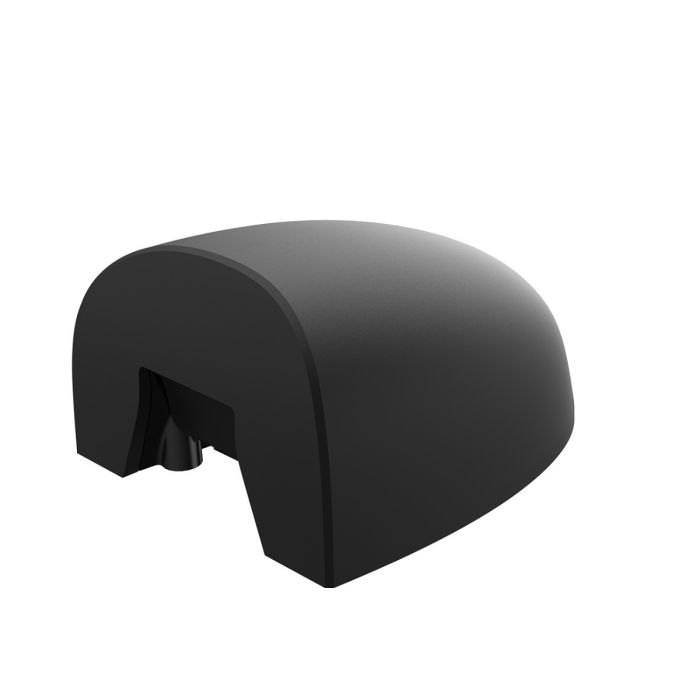
In stock
- PART #:
- PX6AX-GEN3-DP-M2826-Omega
- ORIGIN:
- China
- AVAILABILITY:
- SUBJECT TO AVAILABILITY
- SKU:
- Paxini-PX6AX-GEN3-DP-M2826-Omega
Paxini PX-6AX GEN3 Omega (PX6AX-GEN3-DP-M2826-Omega)
In robotics, tactile sensors complement vision and force/torque sensing by measuring contact forces, friction-related effects, and interaction dynamics at the point of touch. The PX-6AX GEN3 Omega series is marketed around high-rate sampling, environmental sealing, and multi-physics interpretation—attributes aimed at applications where stable grasping, compliant manipulation, and safe human–robot interaction are required.
Design and Features
Form factor and integration intent
The PX6AX-GEN3-DP-M2826-Omega model is listed as a fingertip sensor with a stated physical size of 28 × 26 × 14 mm (L × W × H).
This footprint targets installations where a tactile “pad” must fit within a robotic fingertip geometry while still providing enough sensing area to support edge contacts and partial occlusions during grasping.
Multi-dimensional tactile perception
PaXini describes the PX-6AX GEN3 line as providing “15” physical analyses / tactile interpretations (often summarized as multi-dimensional tactile perception). This framing typically indicates that the sensor and its processing pipeline aim to output multiple derived signals—such as distributed normal force, shear components, and torque-related cues—rather than a single scalar contact value.
Durability and environmental protection
For this Omega model, published listings emphasize:
-
IP68 dust/water resistance
-
10 million-cycle durability (continuous pressing / measurement lifetime)
-
Chip-level anti-magnetic (anti-stray-field) capability
-
Factory calibration / “out-of-factory” fine calibration
These characteristics are commonly sought in industrial robotics deployments where sensors face moisture, dust, repetitive contact cycles, and electromagnetic interference from motors or nearby equipment.
Technology and Specifications
Core outputs and tactile signals
PaXini’s GEN3 product page lists measurement outputs including:
-
3D array-distributed forces, 3D resultant force, and 3D torque/moment
It also notes that the tactile signal count can reach up to 717 channels (depending on configuration/variant).
Measurement ranges and precision
Published parameters for PX-6AX GEN3 include:
-
Normal force range: 0–25 N
-
Tangential (shear) force range: ±10 N
-
Minimum identifiable force: 0.01 N
-
Repeatability: < 0.5% FS
-
Spatial resolution: 0.1 mm
These specifications are relevant for tasks like controlled pinch grasping, slip detection strategies (often derived from shear/torque cues), and handling fragile objects.
Sampling and output rates
The GEN3 page distinguishes between internal sampling and external output:
-
Measurement sampling frequency: up to 1,000,000 Hz
-
Maximum output frequency: 1,000 Hz
In practical robotic systems, the output frequency is often the most directly useful value because it reflects the rate at which the controller can ingest fresh tactile updates for closed-loop grasping.
Operating conditions and electrical
Listed environmental/electrical parameters include:
-
Operating temperature: 0–50 °C
-
Overload temperature: −20 to 120 °C
-
Safety overload: 200%
-
Shock overload: 300%
-
Working voltage: 3–5 V
Applications and Use Cases
Dexterous robotic hands and humanoid manipulation
A primary use case for fingertip tactile sensors is dexterous manipulation, where stable grasping depends on detecting micro-changes in contact and adjusting grip force before slip occurs. Multi-dimensional tactile outputs (normal + shear + moment cues) can support:
-
Adaptive grip force control
-
Edge contact handling
-
Precision placement and in-hand repositioning
Industrial assembly and quality-sensitive handling
In assembly contexts, tactile sensing can help with:
-
Detecting whether a part is fully seated
-
Confirming contact alignment without over-force
-
Handling compliant or delicate components (e.g., soft packaging, elastomers)
R&D and embodied AI training
High-rate tactile feedback is increasingly used in robotics research to improve:
-
Policy learning with contact-rich tasks
-
Sim-to-real transfer validation using tactile ground truth
-
Benchmarking grasp stability under varying friction and object geometry
Advantages / Benefits
High-bandwidth tactile feedback for closed-loop control
A 1,000 Hz maximum output frequency supports responsive, controller-friendly tactile updates for grasp corrections and compliance behaviors.
Robustness in real environments
IP68 protection and a stated >10 million-cycle lifetime align with long-running deployments where tactile pads are frequently contacted, cleaned, or exposed to dust and moisture.
Multi-signal richness
The combination of distributed force, resultant force, and torque/moment outputs enables richer contact inference than single-axis force sensors, potentially reducing reliance on perfect vision in occluded grasps.
FAQ Section
What is Paxini PX-6AX GEN3 Omega (PX6AX-GEN3-DP-M2826-Omega)?
It is a fingertip-scale, multi-dimensional tactile sensor in PaXini’s PX-6AX GEN3 line, sized 28 × 26 × 14 mm, intended to provide high-rate touch feedback (including force distribution and torque-related cues) for robotic hands and grippers.
How does Paxini PX-6AX GEN3 Omega work?
The GEN3 product line is presented as an ITPU multi-dimensional tactile sensing approach that outputs signals such as 3D distributed forces, resultant forces, and moments/torques, enabling a robot controller to interpret contact events and adjust manipulation strategies in near real time.
Why is Paxini PX-6AX GEN3 Omega important?
High-quality tactile sensing is important because many manipulation failures happen at the moment of contact—when vision is occluded or friction varies. With up to 1,000 Hz output, 0.01 N minimum identifiable force, and multi-axis outputs, the GEN3 Omega series targets precise, responsive grasping and safer interaction.
What are the benefits of Paxini PX-6AX GEN3 Omega?
Commonly cited benefits include IP68 sealing, >10 million-cycle durability, chip-level anti-magnetic capability, factory calibration, and high-rate tactile output suitable for closed-loop grasp control.
Summary
Paxini PX-6AX GEN3 Omega (PX6AX-GEN3-DP-M2826-Omega) is a fingertip-oriented, multi-dimensional tactile sensing module designed to strengthen robotic manipulation by adding dense contact feedback—combining compact geometry, IP68 protection, high-rate output, and multi-axis force/torque signals. In systems where grasp stability, compliance, and safe interaction matter, GEN3 Omega sensors represent a tactile-focused approach to improving reliability in real-world handling and embodied AI manipulation workflows.
Specifications
| PART # | PX6AX-GEN3-DP-M2826-Omega |
|---|