
Paxini PX-6AX GEN3 Elite (PX6AX-GEN3-DP-S2015-Elite)
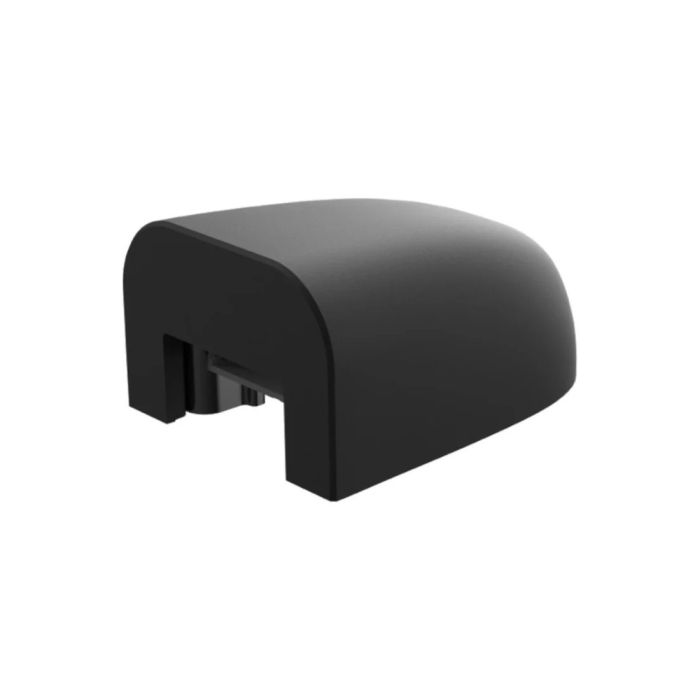
In stock
- PART #:
- PX6AX-GEN3-DP-S2015-Elite
- ORIGIN:
- China
- AVAILABILITY:
- SUBJECT TO AVAILABILITY
- SKU:
- Paxini-PX6AX-GEN3-DP-S2015-Elite
Paxini PX-6AX GEN3 Elite (PX6AX-GEN3-DP-S2015-Elite)
It is part of Paxini’s PX-6AX GEN3 product family, which emphasizes high-frequency tactile data, multi-dimensional physical interpretation, and ruggedization features such as IP68 sealing, chip-level anti-magnetic interference, and industrial-cycle durability.
Public product listings for the S2015 Elite variant describe it as an “Elite series multi-dimensional tactile sensor” with a stated sensor size of 20 × 15 × 10 mm, a 1000 Hz output/sampling frequency (as listed by resellers), 15 types of tactile perception, 0.01 N precision, and 10 million-cycle durability.
In robotics, tactile sensing is commonly used to complement vision and proprioception (joint sensing) by providing direct measurements of contact conditions—a capability that becomes crucial when objects are visually occluded, surfaces are reflective, or grasp stability depends on subtle changes in friction and force distribution. Paxini’s GEN3 line is positioned to address these challenges by delivering contact-rich signals at control-friendly rates and with repeatable calibration.
Design and Features
Fingertip-oriented compact form factor
The PX6AX-GEN3-DP-S2015-Elite is listed with dimensions 20 × 15 × 10 mm, placing it squarely in the “fingertip module” category used in dexterous hands, small grippers, and contact pads where space is limited.
This footprint is significant because fingertip-mounted tactile sensors typically observe the earliest and most informative contact events during grasping—initial touch, micro-slip onset, and localized force changes at edges.
Multi-dimensional tactile perception (“15 types”)
Across reseller listings for the Elite series, the S2015 Elite is described as supporting “multi-dimensional tactile perception (15 types)”.
Paxini’s official GEN3 messaging similarly emphasizes “15 kinds of physical analysis” (15 tactile/physical interpretations), a framing that suggests the platform aims to output more than a single force value—supporting richer contact understanding and more stable manipulation behaviors.
Industrial robustness: sealing, durability, and interference resistance
The S2015 Elite’s publicly listed features emphasize durability and deployment readiness:
-
IP68 waterproof and dustproof
-
10 million-cycle durability
-
Chip-level anti-magnetic capability
-
Factory calibration
These features address common failure modes for tactile components in real use: degradation from repetitive contact, contamination from dust and moisture, and sensor drift due to electromagnetic noise from motors or nearby industrial equipment.
Technology and Specifications
Confirmed specifications from public listings
Reseller product pages for PX6AX-GEN3-DP-S2015-Elite provide a consistent “headline spec” set:
-
Model / part number: PX6AX-GEN3-DP-S2015-Elite
-
Dimensions (L×W×H): 20 × 15 × 10 mm
-
Tactile perception: 15 types
-
Frequency (listed): 1000 Hz
-
Ingress protection: IP68
-
Durability: 10 million cycles
-
Precision: 0.01 N
GEN3 platform-level technical positioning
Paxini’s official GEN3 overview highlights several platform-level attributes that frame how Elite-series sensors are expected to behave in application:
-
“Million-level sampling per second” (very high internal sampling)
-
Repeatability < 0.5% FS
-
0.01 N fine force control
-
Factory fine calibration and chip-level anti-magnetic improvements
-
IP68 and 10 million continuous presses
-
A family breadth of 12 model options spanning fingertip to palm coverage
In system engineering terms, these claims translate into three practical evaluation questions:
-
Signal usefulness: Do the “multi-dimensional” outputs measurably improve grasp success (especially with occlusion or uncertain friction)?
-
Control compatibility: Does the output rate and interface integrate cleanly with the robot controller’s control loop and logging stack?
-
Stability over time: Does calibration remain stable under real-world cycles, cleaning, and environmental variation?
Integration ecosystem: recommended communication accessories
Paxini’s official mall listing for PX-6AX GEN3 explicitly recommends pairing sensors with supporting communication accessories, including a SPI multi-channel adapter box, a high-speed communication integration board, or a single-channel serial port adapter board.
This reflects a typical tactile-sensing reality: the sensor’s value is unlocked only when its data can be streamed reliably, synchronized, and integrated into the robot’s perception-control pipeline.
Applications and Use Cases
Dexterous hands and fingertip manipulation
Fingertip tactile sensors are commonly deployed on dexterous hands to stabilize grasps and enable contact-rich manipulation (e.g., gentle pinches, edge contacts, and in-hand adjustments). The S2015 Elite’s small footprint (20×15×10 mm) matches this integration style.
In such use cases, tactile feedback can be used to:
-
modulate grip force dynamically,
-
detect incipient slip and adjust before failure,
-
improve pick success with partially occluded objects.
Robotic grippers for uncertain surfaces
In industrial handling, vision can struggle with reflective or transparent objects, deformable packaging, or cluttered bins. A tactile fingertip module can provide direct confirmation of contact quality, enabling more reliable “pick and place” behavior—especially when combined with conservative force control and mechanical compliance.
Research, benchmarking, and embodied AI datasets
Paxini positions the GEN3 line as a high-fidelity tactile platform intended to support more intelligent environment interaction via “multi-dimensional” perception.
In research contexts, tactile sensors are frequently used to build datasets for grasping, contact transitions, and manipulation policy learning, where high-rate signals can help capture transient events that are not visible to cameras.
Advantages / Benefits
Dense, control-friendly tactile updates
Reseller listings indicate 1000 Hz for the S2015 Elite’s listed frequency, aligning with the common need for fast feedback in grasp stabilization loops.
Environmental sealing and long-cycle durability
An IP68 tactile module rated for 10 million cycles is well aligned with repeated-contact applications where sensors must survive constant touches, wipes, and exposure to dust and moisture.
Calibration and EMI resilience emphasis
Factory calibration and chip-level anti-magnetic features are explicitly emphasized in both official GEN3 messaging and public listings, targeting stability and repeatability in real robotic systems.
FAQ Section
What is Paxini PX-6AX GEN3 Elite (PX6AX-GEN3-DP-S2015-Elite)?
It is an Elite-series multi-dimensional tactile sensor in Paxini’s PX-6AX GEN3 family, listed with dimensions 20×15×10 mm, “15 types” of tactile perception, and robustness features like IP68 and high-cycle durability.
How does Paxini PX-6AX GEN3 Elite work?
Paxini describes the PX-6AX GEN3 line as providing 15 kinds of physical analysis with high-rate sampling and calibrated tactile sensing intended to capture subtle contact changes. In practice, the sensor streams tactile signals to a host/controller (often via recommended communication accessories) for grasp control and contact interpretation.
Why is Paxini PX-6AX GEN3 Elite important?
Tactile sensing is important because many manipulation failures occur at contact—when vision is occluded or friction varies. Paxini’s GEN3 positioning emphasizes fine force control (0.01 N), repeatability, and robustness (IP68, 10 million presses), targeting more reliable grasping and safer interaction.
What are the benefits of Paxini PX-6AX GEN3 Elite?
Public listings highlight a compact fingertip form factor, 15-type multi-dimensional tactile perception, 1000 Hz listed frequency, IP68 sealing, 10 million-cycle durability, 0.01 N precision, chip-level anti-magnetic features, and factory calibration.
Summary
The Paxini PX-6AX GEN3 Elite (PX6AX-GEN3-DP-S2015-Elite) is a compact 20×15×10 mm fingertip-class tactile sensor positioned to provide multi-dimensional tactile perception with robustness features geared for real use, including IP68 sealing, 10 million-cycle durability, chip-level anti-magnetic resistance, and factory calibration. As part of Paxini’s broader PX-6AX GEN3 lineup emphasizing “15 physical analyses” and high-frequency tactile capture, the S2015 Elite fits common robotics needs in dexterous manipulation, grasp stabilization, and contact-rich research where reliable touch data can materially improve performance beyond vision-only approaches.
Specifications
| PART # | PX6AX-GEN3-DP-S2015-Elite |
|---|